

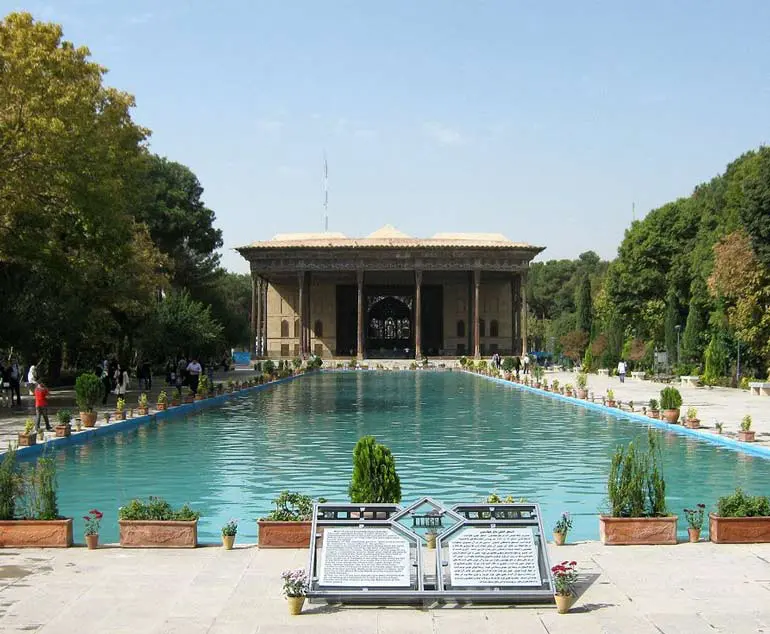
در قلب تپندهی شهر تاریخی اصفهان، جایی که هر گوشه از آن قصهای از شکوه و عظمت ایران باستان را زمزمه میکند، کاخی چون نگینی درخشان خودنمایی میکند: چهلستون. این بنای باشکوه، تنها یک کاخ نیست؛ بلکه آینهای است که تمام قامت امپراتوری صفوی، خلاقیت بیبدیع هنرمندان آن دوران، و اوج اقتدار و فرهنگ این سلسلهی قدرتمند را در خود منعکس میسازد.
چهلستون، با ستونهای بلند و ایوان سترگش که گویی به آسمان تکیه دادهاند، نه تنها جلوهگاه هنر معماری بیهمتای عصر صفوی است، بلکه تالارهای آینهکاری شده و نقاشیهای دیواریاش، پنجرهای رو به زندگی، جنگها، جشنها و وقایع سیاسی آن دوران میگشاید. هر تالار، هر ستون، و هر نقش بر دیوار، داستانی از پادشاهان، سرداران، شاعران و هنرمندانی دارد که روزگاری در این دیار فخر ایرانزمین میزیستهاند.
این کاخ، فراتر از یک اثر تاریخی، شاهدی زنده بر دوران طلایی صفویه است؛ دورانی که اصفهان به پایتخت جهان اسلام بدل شد و هنر، معماری و فرهنگ ایرانی به اوج خود رسید. بیایید با هم سفری به درون این آینهی تاریخ داشته باشیم و شکوه امپراتوری صفوی را در کاخ چهلستون بازتاب دهیم.
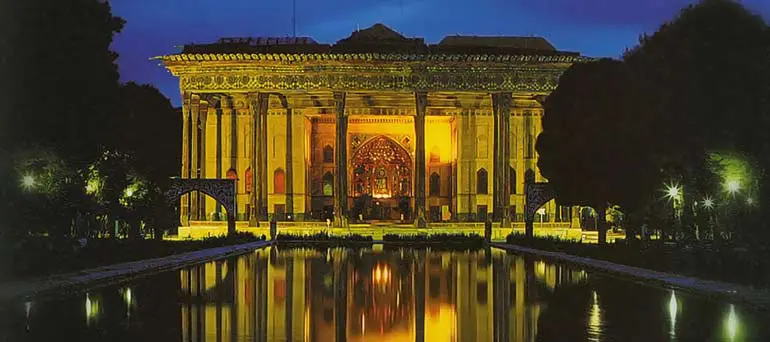
تاریخچه
بنای اولیه: کاخ چهل ستون در ابتدا به شکل یک عمارت هشتضلعی و به منظور پذیرایی از مهمانان و برگزاری مراسم رسمی توسط شاه عباس اول صفوی ساخته شد.
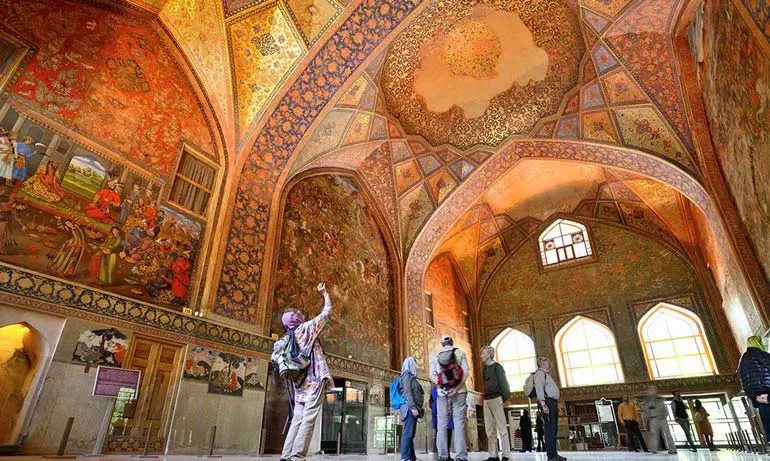
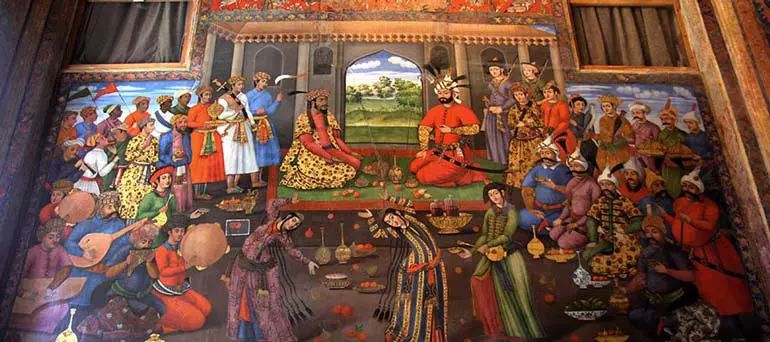
تکمیل و توسعه: در دوران شاه صفی، این بنا گسترش یافت و ایوان ستوندار باشکوه و تالارهای آینهکاری شده به آن افزوده شد. نقاشیهای دیواری ارزشمندی نیز در این دوره به کاخ اضافه شدند که بسیاری از آنها صحنههایی از تاریخ ایران، مانند نبرد شاه اسماعیل با ازبکان، شاه عباس با مغولان، و شاه صفی با بابر را به تصویر میکشند.
تخریب و بازسازی: کاخ چهلستون در طول تاریخ چندین بار مورد حمله و تخریب قرار گرفت، از جمله حمله اشرف افغان در سال ۱۷۳۰ میلادی که بخشهایی از کاخ را ویران کرد. همچنین در دوران قاجار، برخی از نقاشیها به دستور ظلالسلطان، حاکم وقت اصفهان، تخریب شدند. این کاخ در دوران پهلوی مورد بازسازی و مرمت قرار گرفت و امروزه به عنوان یکی از مهمترین جاذبههای گردشگری ایران و بخشی از مجموعه میراث جهانی میدان نقش جهان شناخته میشود.
معماری و تزئینات
کاخ چهلستون نمونهای درخشان از تلفیق هنر معماری ایرانی و چینی است. ویژگیهای برجسته معماری آن عبارتند از:
ایوان ستوندار
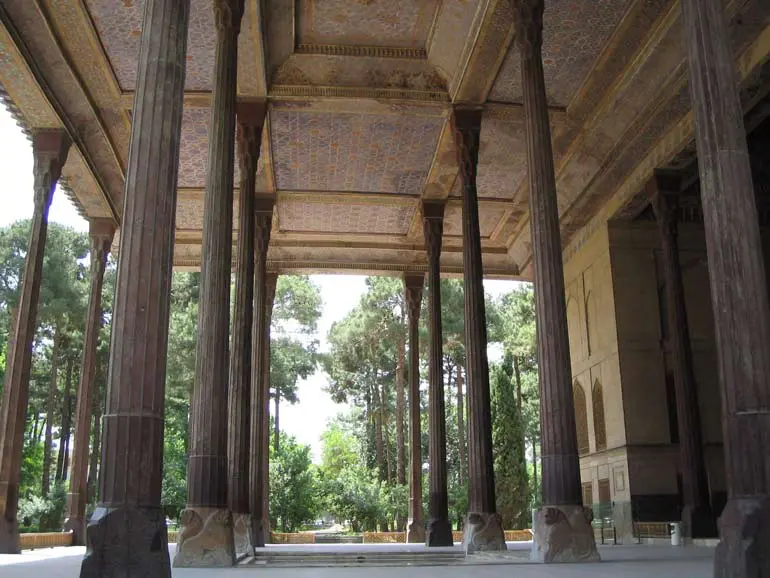
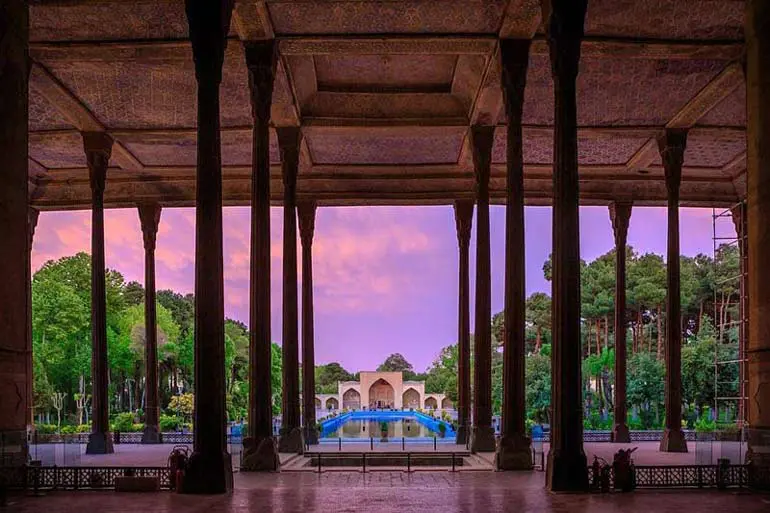
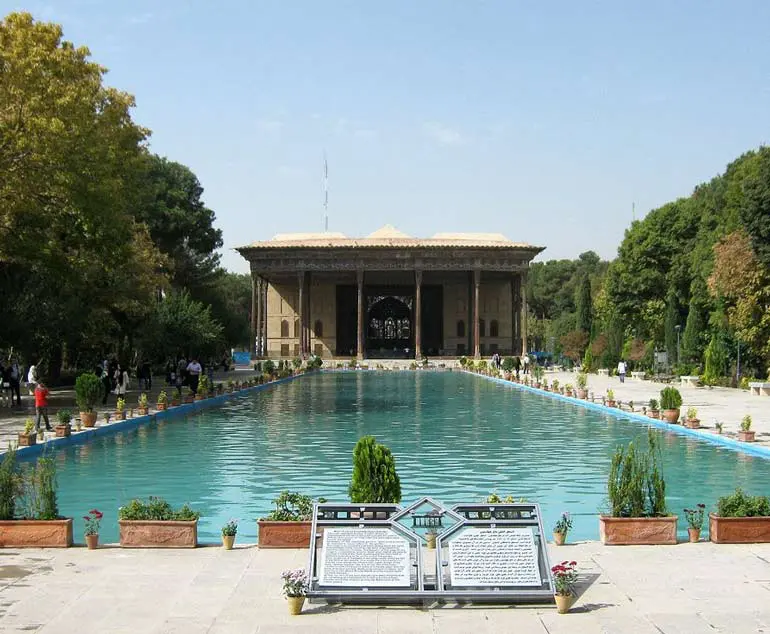
ایوان اصلی کاخ با بیست ستون بلند و زیبا که با سرستونهای طلایی مزین شدهاند، شکوه و عظمت خاصی به بنا میبخشد. این ستونها بر روی شیرهای سنگی تراشیده شده قرار گرفتهاند.
تالار آینه
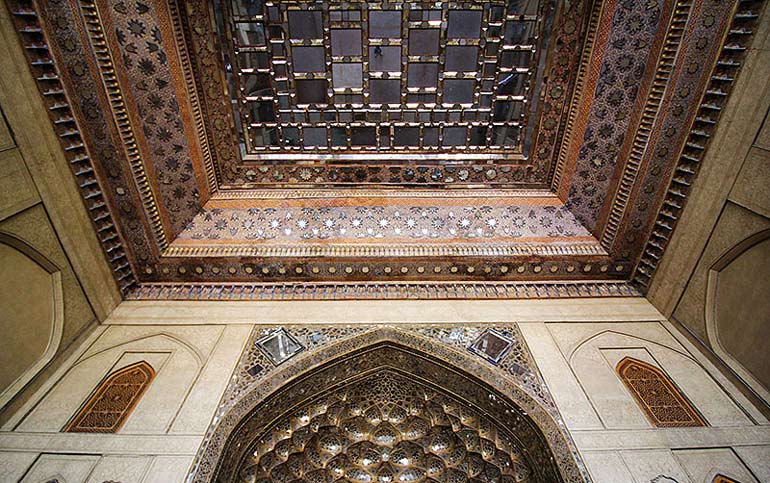
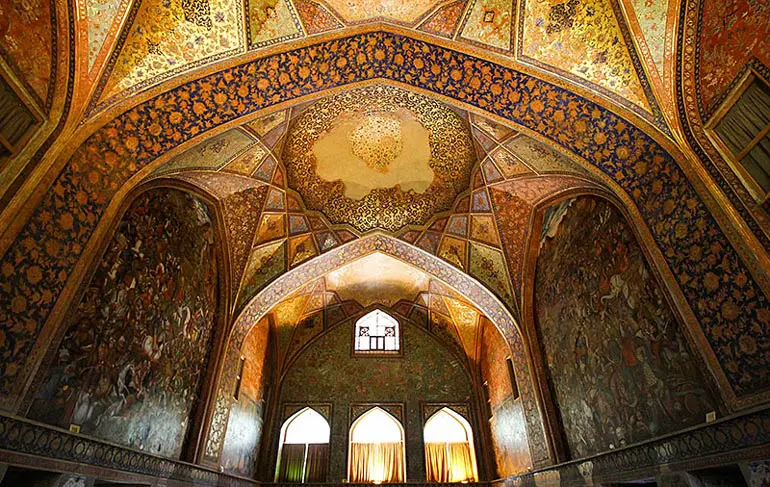
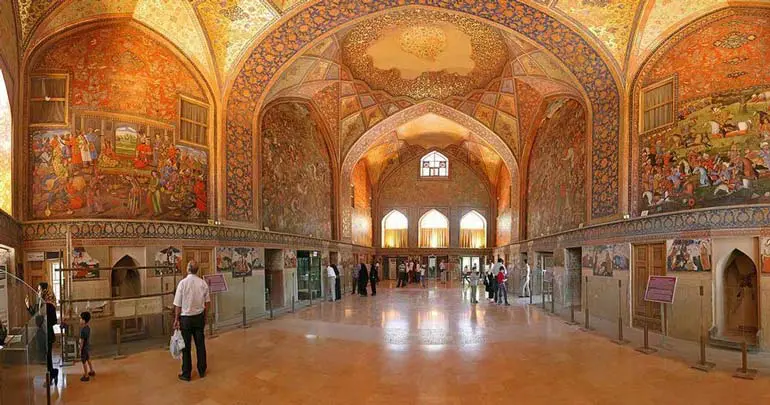
در نظر داشته باشید تالار اصلی کاخ با آینهکاریهای خیرهکننده و تزئینات گچبری و مقرنسکاری، جلوهای بینظیر دارد.
سالن موسیقی
این تالار که در طبقه اول واقع شده، با نقاشیهای زیبا و ظریف از زندگی درباریان، موسیقیدانان و رقصندگان تزئین شده است.
دیگری تالار ۱۸ ستون
تالار دیگری که در طبقه اول قرار دارد و به شاهنشین معروف است.
نقاشیهای دیواری
این نقاشیها که از مهمترین جنبههای هنری کاخ محسوب میشوند، شامل صحنههای تاریخی، مراسم درباری، شکارگاهها و تصاویر اسطورهای هستند. سبک این نقاشیها ترکیبی از هنر ایرانی و تأثیرات هنر اروپایی (به ویژه دوران باروک) است.
باغ ایرانی
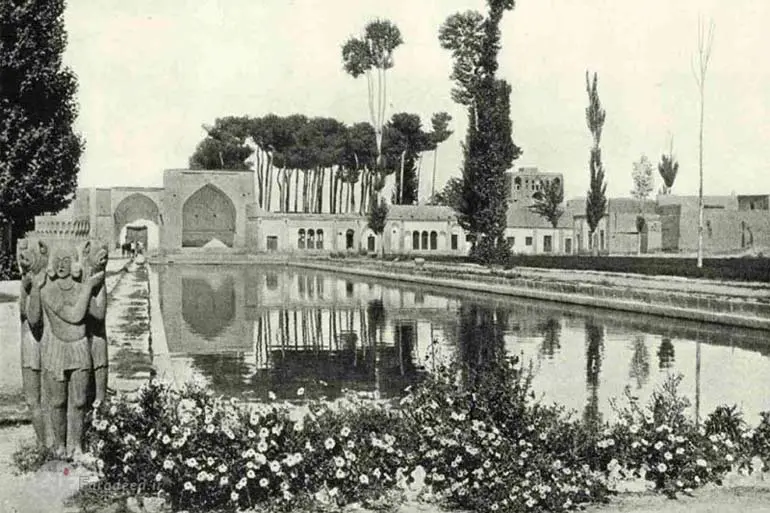
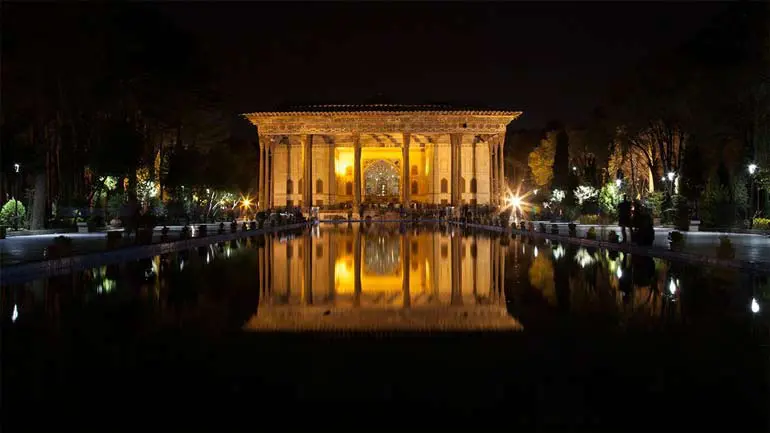
کاخ در میان باغی بزرگ و مستطیل شکل قرار گرفته که با درختان کهنسال، گلهای فراوان و حوضچههای آب، فضایی دلنشین و آرامشبخش ایجاد کرده است. این باغ نیز نمونهای زیبا از باغسازی ایرانی است.
اهمیت تاریخی و فرهنگی
محل برگزاری مراسم رسمی: چهلستون مکانی برای پذیرایی از مهمانان خارجی، برگزاری جشنها و مراسم مهم سلطنتی در دوران صفویه بوده است.
نمایش قدرت و شکوه صفویه: کاخ به عنوان نمادی از قدرت، ثروت و هنر عصر صفویه، شکوه و جلال پادشاهان آن دوره را به نمایش میگذارد.
ثبت در میراث جهانی یونسکو: کاخ چهلستون به همراه میدان نقش جهان و سایر بناهای تاریخی مرتبط، در سال ۱۹۷۹ در فهرست میراث جهانی یونسکو به ثبت رسید.
بازدید از کاخ چهلستون
موقعیت: اصفهان، خیابان چهارباغ پایین، ابتدای خیابان مستوفی.
بهترین زمان بازدید: فصل بهار و پاییز به دلیل آب و هوای مطبوع.
ساعات بازدید: معمولاً از ساعت ۹ صبح تا ۱۸ عصر (با توجه به فصل ممکن است تغییر کند).
نحوه دسترسی به کاخ چهلستون اصفهان
کاخ چهلستون در موقعیتی بسیار مناسب در مرکز شهر اصفهان قرار دارد و دسترسی به آن با وسایل مختلف به راحتی امکانپذیر است.
۱. موقعیت جغرافیایی:
آدرس دقیق: استان اصفهان، شهر اصفهان، خیابان چهارباغ پایین، ابتدای خیابان مستوفی (ضلع شرقی خیابان چهارباغ پایین).
مختصات: ۳۲.۶۴۳۵° N, ۵۱.۶۶۴۲° E
۲. دسترسی با خودروی شخصی:
اگر از اتوبان شهید خرازی (غربیترین اتوبان اصفهان) یا اتوبان شهید صیاد شیرازی (شمالی-جنوبی) به سمت مرکز شهر میآیید، با دنبال کردن تابلوهای راهنمای مرکز شهر و سپس خیابان چهارباغ پایین، به راحتی به نزدیکی کاخ خواهید رسید.
خیابان چهارباغ پایین یکی از خیابانهای اصلی و تاریخی شهر است که کاخ چهلستون در انتهای شمالی آن (نزدیک میدان انقلاب) واقع شده است.
پارکینگ: در اطراف کاخ چهلستون، به ویژه در خیابانهای منتهی به آن و پارکینگهای عمومی نزدیک میدان انقلاب یا میدان امام حسین (ع)، امکان پارک خودرو وجود دارد. البته ممکن است در ساعات شلوغی پیدا کردن جای پارک کمی دشوار باشد.
۳. دسترسی با وسایل حمل و نقل عمومی:
اتوبوس:
بسیاری از خطوط اتوبوس شهری در اصفهان از خیابان چهارباغ پایین عبور میکنند یا به نزدیکی آن میرسند. نزدیکترین ایستگاهها معمولاً در نزدیکی میدان انقلاب یا میدان امام حسین (ع) قرار دارند. از این میادین، با کمی پیادهروی (حدود ۵ تا ۱۰ دقیقه) میتوانید به ورودی کاخ برسید.
خطوط اتوبوس BRT (ترمینال صفه به پایانه کاوه) نیز در میدان امام حسین (ع) توقف دارند که دسترسی از نقاط دورتر شهر را آسان میکند.
تاکسی:
استفاده از تاکسیهای شهری یا سرویسهای آنلاین تاکسی (مانند اسنپ و تپسی) رایجترین و راحتترین روش برای رسیدن به کاخ چهلستون است. کافی است مقصد را “کاخ چهلستون” یا “خیابان چهارباغ پایین” تعیین کنید.
۴. پیادهروی:
اگر در مناطق مرکزی شهر اصفهان مانند میدان نقش جهان، میدان امام علی (ع)، یا میدان انقلاب اقامت دارید یا از آنها بازدید میکنید، کاخ چهلستون با پیادهروی کوتاهی قابل دسترسی است. خیابان چهارباغ پایین خود یک مسیر پیادهروی زیبا و تاریخی است.
نکته: با توجه به موقعیت مرکزی کاخ چهلستون، بهترین راه برای تجربه کامل زیباییهای منطقه، ترکیب پیادهروی در خیابان چهارباغ با استفاده از حمل و نقل عمومی یا تاکسی برای مسافتهای طولانیتر است.
Chehel Sotoun Palace of Isfahan: A Reflection of Safavid Empire’s Grandeur
In the beating heart of the historic city of Isfahan, where every corner whispers tales of ancient Iran’s grandeur and magnificence, a palace shines like a brilliant jewel: Chehel Sotoun. This magnificent edifice is more than just a palace; it is a mirror that reflects the entire stature of the Safavid Empire, the unparalleled creativity of its artists, and the peak of this powerful dynasty’s power and culture
Chehel Sotoun, with its tall columns and imposing portico that seem to lean towards the sky, is not only a showcase of the unparalleled architectural art of the Safavid era but also, through its mirror-worked halls and wall paintings, opens a window onto the life, wars, celebrations, and political events of that time. Every hall, every column, and every motif on the wall tells a story of the kings, commanders, poets, and artists who once lived in this land, the pride of Iran
History
Initial Construction: Chehel Sotoun was initially built as an octagonal structure by Shah Abbas I as a place for receiving guests and holding official ceremonies.
Completion and Expansion: During the reign of Shah Safi, the palace was expanded with the addition of its magnificent columned portico and mirror-worked halls. Valuable wall paintings were also added during this period, many of which depict scenes from Iranian history, such as the battles of Shah Ismail with the Uzbeks, Shah Abbas with the Mongols, and Shah Safi with Babur.
Destruction and Reconstruction: Chehel Sotoun suffered damage and destruction multiple times throughout history, including an attack by Ashraf Afghan in 1730 AD, which ruined parts of the palace. Additionally, during the Qajar era, some paintings were destroyed by order of Zill al-Sultan, the ruler of Isfahan at the time. The palace underw
Architecture and Decorations
Chehel Sotoun is a brilliant example of the fusion of Iranian and Chinese architectural art. Its prominent architectural features include
Columned Portico
The main portico of the palace, with twenty tall and beautiful columns adorned with gilded capitals, lends a unique grandeur to the structure. These columns rest on carved stone lions
Hall of Mirrors
The main hall of the palace boasts stunning mirror work and exquisite plaster decorations and muqarnas, creating a breathtaking ambiance
Music Hall
Located on the first floor, this hall is decorated with delicate and beautiful paintings of courtiers, musicians, and dancers
Eighteen-Column Hall
Another hall on the first floor, known as the Shah-neshin (royal seat)
Wall Paintings
These paintings, considered among the most significant artistic aspects of the palace, include historical scenes, court ceremonies, hunting scenes, and mythological depictions. The style of these paintings is a blend of Persian art and influences from European art (particularly the Baroque period)
Persian Garden
The palace is situated amidst a large, rectangular garden, which, with its ancient trees, abundant flowers, and water channels, creates a pleasant and serene atmosphere. This garden is also a beautiful example of Persian garden design
Historical and Cultural Significance
Venue for Official Ceremonies: Chehel Sotoun served as a venue for hosting foreign dignitaries, holding celebrations, and important royal ceremonies during the Safavid era
Display of Safavid Power and Grandeur: The palace, as a symbol of the power, wealth, and art of the Safavid age, showcases the splendor and magnificence of the kings of that period
UNESCO World Heritage Registration: Chehel Sotoun Palace, along with Naqsh-e Jahan Square and other related historical structures, was registered on the UNESCO World Heritage List in 1979
Visiting Chehel Sotoun Palace
Location: Isfahan, Chaharbagh Pa’in Street, beginning of Mostofi Street
Best Time to Visit: Spring and Autumn, due to the pleasant weather
Visiting Hours: Generally from 9 AM to 6 PM (may vary depending on the season)
How to Access Chehel Sotoun Palace in Isfahan
Chehel Sotoun Palace is ideally situated in the center of Isfahan, making it easily accessible by various means of transportation
Geographical Location
Exact Address: Isfahan Province, Isfahan City, Chaharbagh Pa’in Street, beginning of Mostofi Street (eastern side of Chaharbagh Pa’in Street)
Coordinates: 32.6435° N, 51.6642° E
Access by Private Car
If you are coming from Shahid Kharazi Highway (Isfahan’s westernmost highway) or Shahid Sayyad Shirazi Highway (North-South), by following the signs for the city center and then Chaharbagh Pa’in Street, you will easily reach the vicinity of the palace
Chaharbagh Pa’in Street is one of the main and historic streets of the city, with Chehel Sotoun Palace located at its northern end (near Enghelab Square)
Parking: Around Chehel Sotoun Palace, especially on the streets leading to it and in public parking lots near Enghelab Square or Imam Hossein (AS) Square, you can park your car. However, finding a parking spot might be a bit difficult during crowded hours
نقشه :
Access by Public Transportation
Bus
Many city bus lines in Isfahan pass through or reach near Chaharbagh Pa’in Street. The nearest stations are usually located near Enghelab Square or Imam Hossein (AS) Square. From these squares, you can reach the palace entrance with a short walk (about 5 to 10 minutes). The BRT bus lines (Safah Terminal to Kaveh Terminal) also stop at Imam Hossein (AS) Square, making access easier from farther parts of the city
Taxi
Using city taxis or online taxi services (like Snapp and Tapsi) is the most common and convenient way to reach Chehel Sotoun Palace. Simply set your destination to “Chehel Sotoun Palace” or “Chaharbagh Pa’in Street.”
Walking
If you are staying in or visiting the central areas of Isfahan, such as Naqsh-e Jahan Square, Imam Ali (AS) Square, or Enghelab Square, Chehel Sotoun Palace is accessible by a short walk. Chaharbagh Pa’in Street itself is a beautiful and historic pedestrian route
Note
Given Chehel Sotoun’s central location, the best way to fully experience the beauty of the area is to combine walking along Chaharbagh Street with the use of public transport or taxis for longer distances.
“چهلستون” به دلیل وجود بیست ستون چوبی در ایوان اصلی کاخ است که انعکاس آنها در آب جلوی کاخ، مجموعاً چهل ستون را تداعی میکند.
ایوان ستوندار با بیست ستون بلند، تالار آینه با آینهکاریهای خیرهکننده، تالار موسیقی و نقاشیهای دیواری ارزشمند که صحنههای تاریخی و درباری را به تصویر میکشند، از مهمترین بخشهای کاخ هستند.
این کاخ نمادی از شکوه و هنر دوره صفویه، محل برگزاری مراسم رسمی و پذیرایی از مهمانان بلندپایه بوده و به همراه میدان نقش جهان در فهرست میراث جهانی یونسکو ثبت شده است.


