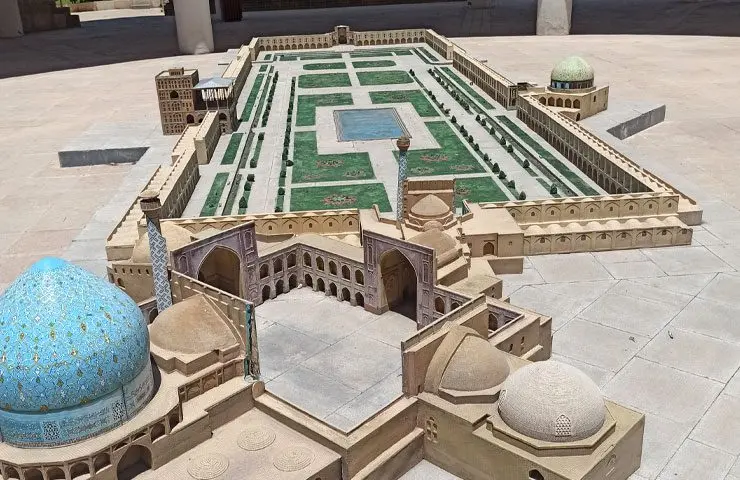
If you would like to see Iran’s most important historical monuments without leaving Tehran, the Miniature Garden Museum is one of the most appealing options. Located in eastern Tehran, this complex features precise and artistically crafted models of Iran’s UNESCO-registered sites, offering visitors a unique cultural tourism experience. With its lush green space, design inspired by the Persian garden, and a blend of art, history, and nature, the Miniature Garden Museum has become an ideal destination for families, photography enthusiasts, and history lovers.

Where is the Tehran Miniature Garden Museum?
The Miniature Garden Museum opened in 2013 on a site of about three hectares. It is Iran’s first thematic park showcasing the country’s globally registered historical and cultural heritage through miniature models with remarkable detail. Interestingly, the placement of the models largely corresponds to their actual geographical locations across Iran.

Highlights of the Miniature Garden Museum
In this garden, you can see small yet highly detailed replicas of some of Iran’s most famous historical sites, including:
Persepolis (Parseh)
The most magnificent remnant of the Achaemenid Empire, over 2,500 years old, symbolizing the art, architecture, and power of ancient Iran. Its model in the garden beautifully displays the intricate details of the columns, palaces, and famous stairways of this grand complex.

Naqsh-e Jahan Square (Isfahan)
One of the largest historical squares in the world, built during the Safavid era and surrounded by landmarks such as the Imam Mosque, Sheikh Lotfollah Mosque, and Ali Qapu Palace. The model of this square captures the splendor of its architecture and unique symmetry on a smaller scale.
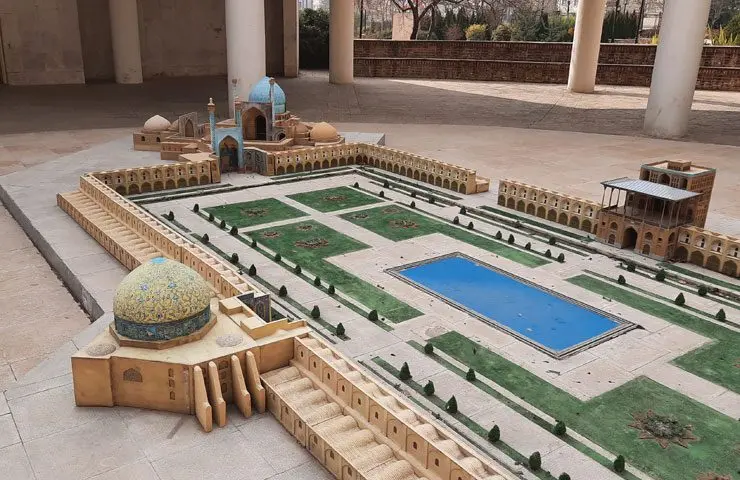
Bam Citadel
The world’s largest adobe structure, located in Kerman Province, which was extensively restored after the 2003 earthquake. The model of Bam Citadel recreates its mud-brick fabric and watchtowers, offering a realistic view of this invaluable monument.
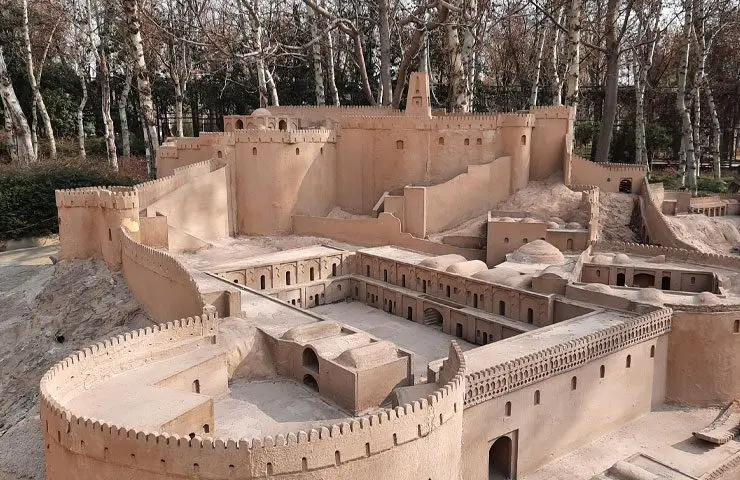
Chogha Zanbil
An ancient ziggurat belonging to the Elamite civilization, built around 3,200 years ago for worship. This stepped structure is one of Iran’s oldest historical sites, and its model showcases the unique architecture of this temple.
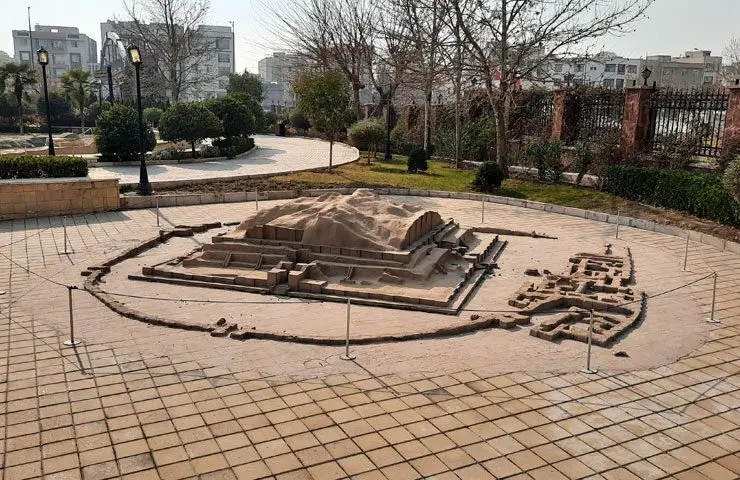
Bisotun
The Bisotun historical complex in Kerman Province is world-famous for its inscription of Darius the Great and other precious archaeological remains. In the garden, the model offers a small but precise depiction of the rock face and its ancient inscription.
Soltaniyeh Dome
The mausoleum of Sultan Mohammad Khodabandeh (Oljaytu) in Zanjan Province, with its vast turquoise dome, is considered a masterpiece of Ilkhanid architecture. Its model faithfully recreates the architectural elegance and visually harmonious proportions of the building.

Pasargadae
The first capital of the Achaemenid Empire and the site of Cyrus the Great’s tomb, considered one of the most significant symbols of Iranian history. The Pasargadae model accurately depicts the tomb of Cyrus and parts of the royal complex.

Armenian Monastic Ensembles of Iran
This collection includes three historical churches in northwestern Iran, some of which date back to the early centuries of Christianity. The models introduce the stone architecture and cultural value of these churches in miniature form.

Shushtar Historical Hydraulic System
A complex of bridges, mills, canals, and historic dams that, with their astonishing engineering, once directed river water for agriculture and industry. The model illustrates part of the hydraulic engineering genius of Iranians during the Sasanian era.
Sheikh Safi al-Din Ardabili Shrine Complex
The mausoleum and monastery of Sheikh Safi al-Din, the renowned Iranian mystic and forebear of the Safavid dynasty, which is among the most important historical buildings in Ardabil. The model presents a compact display of authentic Iranian-Islamic architecture and its key sections.
Gonbad-e Qabus (Qabus Dome)
Gonbad-e Qabus is a masterpiece of architecture dating back to the 4th century AH (10th century AD) and is inscribed on the UNESCO World Heritage List. In one section of the garden surrounding this dome, a brick tower catches the eye—renowned as the tallest brick tower in the world. Gonbad-e Qabus is a precious monument located in the city of Gonbad-e Kavus in Golestan Province. This beautiful structure was built atop a 15-meter-high hill, and its original height reaches 60 meters.

Takht-e Soleyman (Solomon’s Throne)
The historical complex of Takht-e Soleyman is situated 45 kilometers northeast of the city of Takab in West Azerbaijan Province. This site was inscribed on the UNESCO World Heritage List in 2003. It is built in a green valley on a stone platform covering an area of about 12.5 hectares. The structure dates back to the Sasanian era and is believed to have been a place for religious ceremonies.

Tabriz Bazaar
You now come to a section where the largest model in the Miniature Garden Museum is displayed—the Grand Bazaar of Tabriz. This is a very old bazaar, constructed from interconnected brick structures within an enclosed space. This bazaar is regarded as the most complete social organization among the bazaars of Iran. The Tabriz Bazaar covers an area of about one square kilometer and includes numerous timchehs (covered passageways), sarays (caravanserais), and caravanserais. The model of the covered Tabriz Bazaar is beautifully showcased in the garden, evoking the feeling of strolling through the market in days gone by. This invaluable monument was inscribed on the World Heritage List in 2010.

These models are crafted with great precision and, along with green spaces, water channels, and walking paths, evoke the feeling of traveling across Iran in a short time.
Facilities at the Garden
In addition to the historical models, the complex offers amenities such as benches, green areas, drinking water fountains, restrooms, signboards, a cultural products shop, and resting areas. These features make the Miniature Garden Museum an excellent choice for a half-day family outing or open-air photography.

Address and Access
Address: Tehran, West Janbazan Street, between Imam Ali Highway and Kerman Street, next to Tamaddon Park.
By private car: The complex is easily accessible via Imam Ali Highway or West Janbazan Street.
By public transportation: Take Bus Rapid Transit (BRT) Line 5 to Resalat Square, then continue by bus or taxi along Janbazan Street to reach the museum.

Visiting Hours and Admission
The Miniature Garden Museum is open daily from 8:00 AM to 8:00 PM, and admission is free. However, it is advisable to check the operating hours before your visit, as they may change on certain occasions.