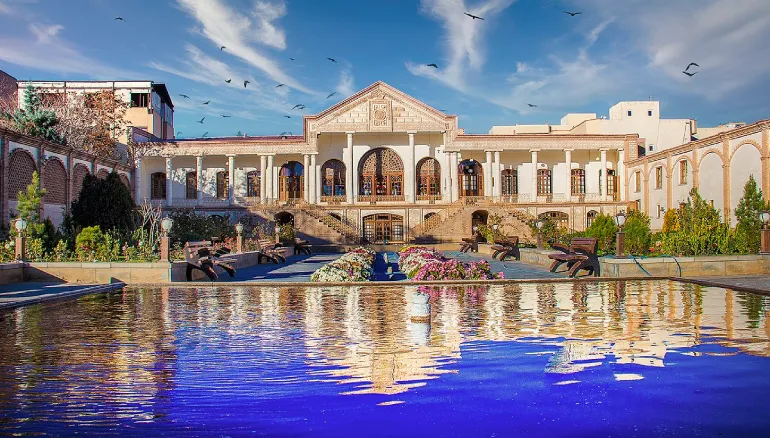
Qajar Museum of Tabriz is one of the most beautiful and valuable historical museums in Iran, housed in a magnificent building from the Qajar period known as the Amir Nezam Garrousi House. With its eye-catching architecture, authentic Iranian decorations, and a rare collection of historical artifacts, this museum introduces visitors to the lifestyle, art, culture, and customs of the Qajar era. Situated in one of the oldest neighborhoods of Tabriz, the museum holds even greater appeal for history and architecture enthusiasts.
If you are looking for a place that, in addition to its magnificent architecture, houses a collection of historical objects, coins, carpets, dishes, documents, and works of art, the Qajar Museum is one of the best options in Tabriz. The peaceful atmosphere of the courtyard, the central pool, and the colorful stained-glass windows of this mansion provide a delightful setting for photography and for getting acquainted with authentic Iranian architecture.

History of the Qajar Museum
The current museum building was constructed in the late period of Naser al-Din Shah Qajar, by order of Hassan Ali Khan Amir Nezam Garrousi, one of the prominent political and military figures of that era. Amir Nezam Garrousi, who served in various governmental positions and as Iran’s ambassador for many years, built this house as his residence in Tabriz. The building’s design was inspired by authentic Iranian architecture, utilizing the finest materials and the artistry of master craftsmen of the time.
After the end of the Qajar period, this mansion served various functions, including as an administrative building, until the Cultural Heritage Organization restored and renovated it. Finally, in 2006 (1385 AH), the building was opened as a specialized Qajar museum to display artifacts related to this historical period in an atmosphere befitting that era. Today, this museum is considered one of the most important centers for introducing the culture and art of the Qajar period in Iran.

Architecture of the Qajar Museum
The Amir Nezam Garrousi mansion is a rare example of late Qajar-period architecture. The building has two floors and features columned porticos, sash windows (orsi), delicate stucco work, artistic brickwork, and striking mirror decorations, each part demonstrating the skill of Iranian master craftsmen. Natural light entering through the stained glass creates a dazzling effect in the interior spaces.
The central courtyard of the building, with its large pool, orderly flowerbeds, and old trees, creates a pleasant atmosphere that is a hallmark of the aristocratic houses of the Qajar period. Symmetry in design, high ceilings, wide corridors, and the use of traditional Iranian elements make this mansion not only historically valuable but also one of the most beautiful historical houses in Tabriz.

Coin Hall
One of the most fascinating sections of the Qajar Museum is the Coin Hall, which displays a valuable collection of historical Iranian coins from various periods. In this section, visitors can see coins from the Qajar period alongside examples from earlier dynasties and learn about the evolution of coin minting in Iran. This collection is of great significance to those interested in the country’s economic and monetary history.
In addition to the coins, information about minting methods, images of kings, inscriptions, and the historical value of each specimen is provided. A visit to this hall shows how political, economic, and cultural changes of each period are reflected in the design and material of the coins.
Glassware Hall
The Glassware Hall houses a collection of exquisite glass vessels from the Qajar period. Many of these works were made using the advanced glassmaking techniques of that era and feature floral, geometric, and eye-catching colored patterns. The delicacy of these vessels clearly demonstrates the skill of Iranian artists.
Alongside domestically produced items, examples of imported European works can also be seen, reflecting Iran’s trade relations with other countries during the Qajar period. These artifacts offer a clear picture of the artistic taste and lifestyle of the aristocracy at that time.

Metals Hall
In the Metals Hall, a variety of vessels, candlesticks, teapots, trays, and decorative objects made of brass, copper, silver, and other metals are on display. Many of these items are crafted with very fine engraving, carving, and ornamentation and are considered masterpieces of Iranian metalwork art.
A visit to this hall shows that the craftsmen of the Qajar period, in addition to making functional items, also paid special attention to their aesthetic appearance. Arabesque designs, floral and bird motifs, and engraved inscriptions on the vessels are distinguishing features of this collection.

Music Hall
The Music Hall, with its display of various traditional Iranian musical instruments, is one of the most unique sections of the museum. In this section, instruments such as the tar, setar, kamancheh, santur, and tombak are displayed alongside explanations about their history and usage, introducing visitors to the music popular during the Qajar period.
In addition to the instruments, images of Qajar-era musicians and courtiers are also displayed in this section, showing that music held a special place in formal ceremonies and artistic gatherings of that time.

Stone Hall
The Stone Hall is one of the unique sections of the Qajar Museum, showcasing a collection of inscriptions, historical stone tablets, and carved stone works. These artifacts belong to various historical periods, some of which date back to the Qajar era. Arabesque motifs, calligraphic scripts, Quranic verses, and commemorative inscriptions are among the works displayed in this hall, all of which hold great historical and artistic value.
Beyond their artistic aspect, these works provide valuable information about the culture, religion, and writing styles of past periods. Some of the stones originally belonged to historical monuments or old tombs and were transferred to the museum after restoration and preservation. The study of these inscriptions is of particular importance to researchers of Islamic history and art.
Arms Hall
The Arms Hall displays a collection of cold and firearms from the Qajar period. In this section, various swords, daggers, shields, muzzle-loading rifles, pistols, and military equipment can be seen, many of which belonged to dignitaries and military commanders of that era. The delicate design of the handles, sheaths, and metal decorations shows that these weapons had an artistic dimension in addition to their military function.
This hall provides a picture of Iran’s military structure during the Qajar period and illustrates how, with the introduction of firearms, military equipment underwent significant changes. Some of the weapons feature engraving, gold inlay, and exquisite decorations, making them valuable works of art.

Porcelain Hall
One of the most beautiful sections of the museum is the Porcelain Hall, which houses a collection of porcelain, ceramic, and earthenware items. These artifacts include domestically produced pottery as well as imported examples from China and Europe that were popular among aristocratic families and the royal court during the Qajar period. The quality of workmanship, glossy glazes, and delicate patterns of these items attract the attention of every visitor.
Among the works in this hall are pieces featuring floral and bird motifs, natural landscapes, dragon designs, and traditional Eastern patterns. This collection reflects Iran’s cultural and commercial connections with other countries during the Qajar period and effectively showcases the influence of both Eastern and Western art on Iranian handicrafts.

Carpet Hall
Persian carpets have always been one of the most important symbols of Iranian art, and the Carpet Hall of the Qajar Museum houses a valuable collection of handwoven rugs and carpets. Most of these carpets come from various cities in Azerbaijan, Tabriz, Kashan, and Kerman, and they are of great artistic value in terms of color, design, and weaving quality.
In this hall, visitors can learn about different weaving techniques, traditional dyeing methods, and authentic Iranian patterns. Many of the displayed carpets, in addition to their economic value, tell stories about the culture, beliefs, and art of the people from different regions of Iran, making them among the museum’s standout pieces.
Dignitaries Hall
The Dignitaries Hall is dedicated to introducing prominent figures of the Qajar period. In this section, portraits, documents, letters, and images of political, military, cultural, and literary dignitaries of that era are preserved. By reading the descriptions accompanying each item, visitors can learn about the roles these figures played in Iran’s historical developments.
Among the works in this hall are images of Amir Nezam Garrousi, court dignitaries, princes, and influential figures of the Qajar period. In addition to introducing individuals, this section also portrays part of the political and social atmosphere of Iran during the 13th century AH (19th century AD).

Basement of the Museum
The basement of the Amir Nezam Garrousi mansion also forms part of the museum’s exhibition space. The architecture of this area, with its brick vaults, traditional arches, and thick walls, is an example of the construction style of aristocratic houses in Tabriz during the Qajar period. The cool basement was used in the past for storing food and for resting during the hot summer days.
Today, a number of historical artifacts, everyday living equipment, and ethnographic objects are displayed in this section. A visit to the basement, in addition to introducing visitors to traditional architecture, provides a picture of the lifestyle of wealthy families in that era.

Prominent Artifacts of the Qajar Museum
Among the most important artifacts of this museum are the collection of historical coins, exquisite Tabriz carpets, imported porcelain items, engraved metalworks, traditional musical instruments, historical documents, stone inscriptions, and a collection of decorative weapons. Each of these artifacts tells a part of the history, art, and culture of Iran during the Qajar period, and for this reason, they hold great research and historical value.
Another major attraction of the museum is the Amir Nezam Garrousi building itself. Many tourists visit the museum solely to admire the architecture of this historical mansion. The colorful sash windows, mirror decorations, stucco work, and the beautiful courtyard pool make this building one of the finest examples of historical houses in Tabriz.

Why Visit the Qajar Museum?
If you are interested in Iranian history, architecture, and art, the Qajar Museum is one of the most comprehensive collections you can visit during your trip to Tabriz. The diversity of artifacts, the historical atmosphere of the mansion, and the layout of the halls make visiting this museum a different experience compared to many other museums in the country.
Furthermore, the museum’s proximity to many of Tabriz’s historical attractions allows you to visit several landmarks in a single day. For this reason, the Qajar Museum is considered one of the most popular attractions in Tabriz for both domestic and foreign tourists.
Address of the Qajar Museum of Tabriz
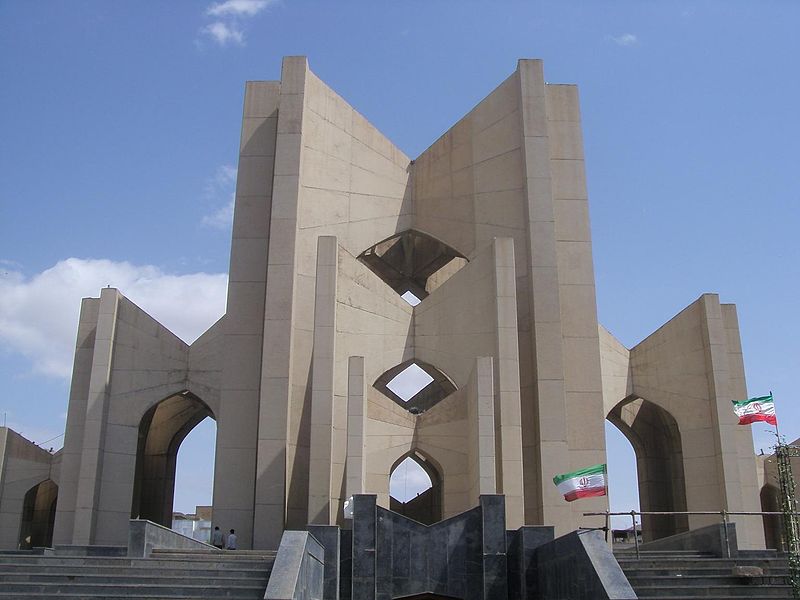
The Qajar Museum is located in East Azerbaijan Province, Tabriz, in the historic Sheshgelan neighborhood, on Soghat-ol-Eslam Street, Shahriar Street, behind the Maqbarat-o-Shoara (Poets’ Mausoleum), next to the Children’s Hospital. The museum is situated in the historical Amir Nezam Garrousi mansion and, due to its location in one of Tabriz’s oldest neighborhoods, offers easy access to other historical attractions in the city, such as the Poets’ Mausoleum, the Constitutional House, and the historic Tabriz Bazaar.

How to Access the Qajar Museum
Access to the Qajar Museum is easily possible via public transportation or private vehicle. If you are using your own car, simply make your way to the Sheshgelan neighborhood and Soghat-ol-Eslam Street; the Amir Nezam Garrousi mansion is located near the Poets’ Mausoleum and can be easily found using navigation apps. However, due to the historic nature of the area, parking may take a little time to find on holidays.
For public transportation, you can take Line 1 of the Tabriz Metro to Saat Square Station, and then continue the rest of the way by taxi or walk for about 20 minutes. Additionally, several city bus lines, including lines 116, 118, and 125, pass through Seyyed Hamzeh Station, which is a short distance from the museum. City taxis are also available from most parts of Tabriz to the Sheshgelan neighborhood and the Poets’ Mausoleum, making them one of the most convenient options for reaching the museum.