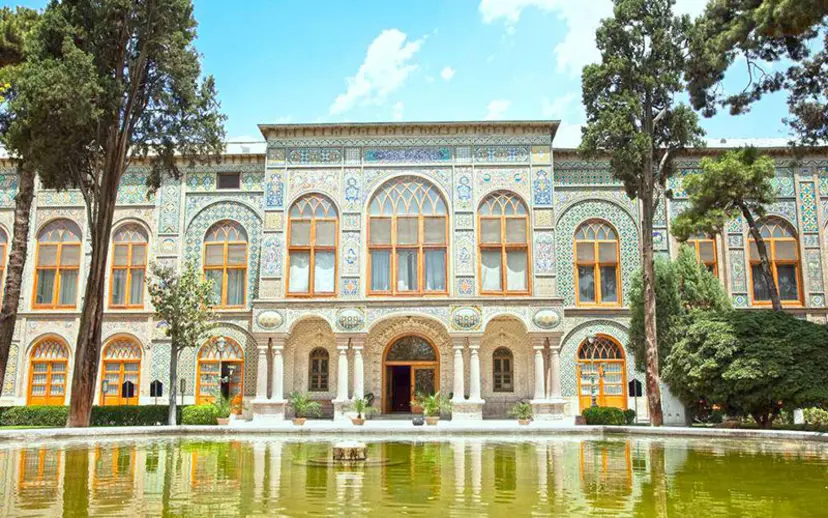
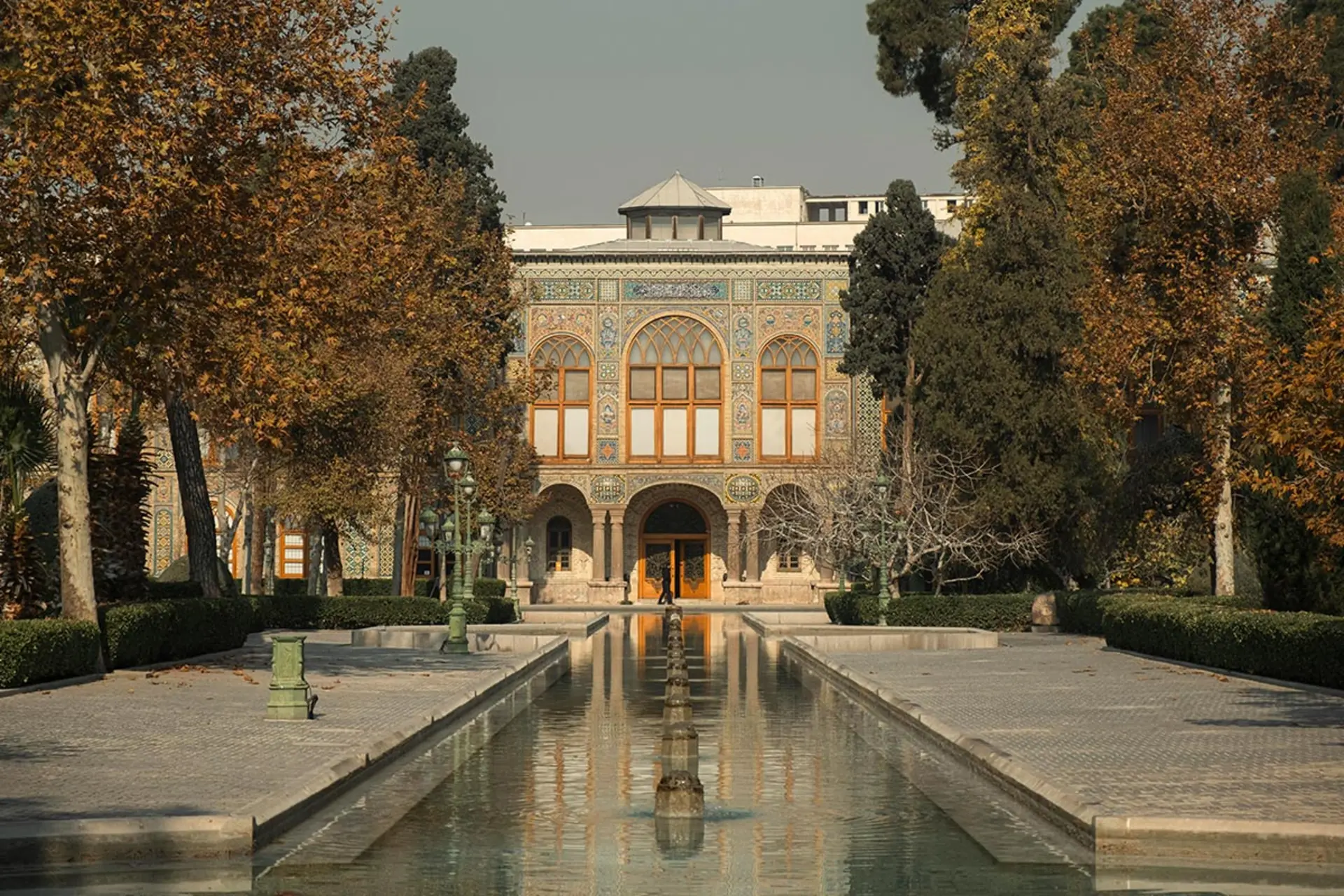
Golestan Palace, Tehran is one of the most magnificent and valuable historical monuments in Iran, located in the heart of the capital. It recounts a chapter of Iranian history, art, and architecture from the Qajar era. Registered as a UNESCO World Heritage Site, this historical complex, with its grand mansions, mirrored halls, Persian garden, and fascinating museums, attracts numerous tourists from all over Iran and the world each year. If you are planning to visit this complex or wish to learn about its history, various sections, visiting hours, ticket prices, and how to access Golestan Palace in Tehran, this comprehensive guide will provide you with all the necessary information.
History of Golestan Palace
The history of the Golestan Palace Museum dates back to the Safavid era, but its most significant development and glory occurred during the Qajar period. After Agha Mohammad Khan Qajar chose Tehran as the capital of Iran, this complex became the official residence of the Qajar kings. During the reign of Naser al-Din Shah, inspired by his European travels, new sections were added to the palace, and many of the current buildings were constructed or renovated.
In 2013 (1392 Solar Hijri), the Golestan Palace complex was inscribed on the UNESCO World Heritage List due to its historical, architectural, and cultural value.
Architecture and Unique Features
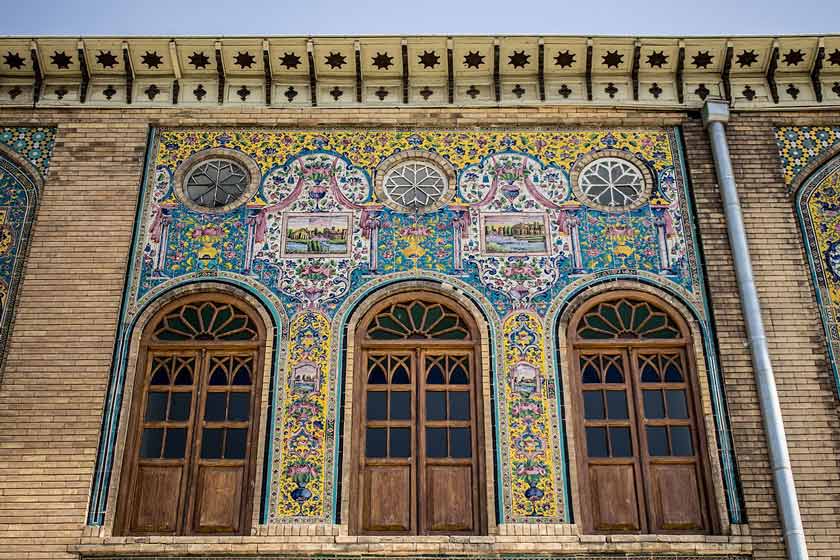
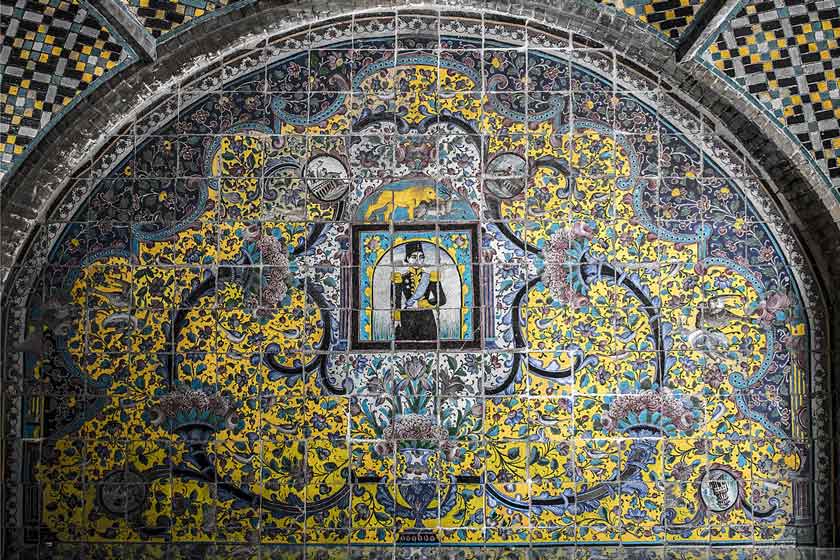
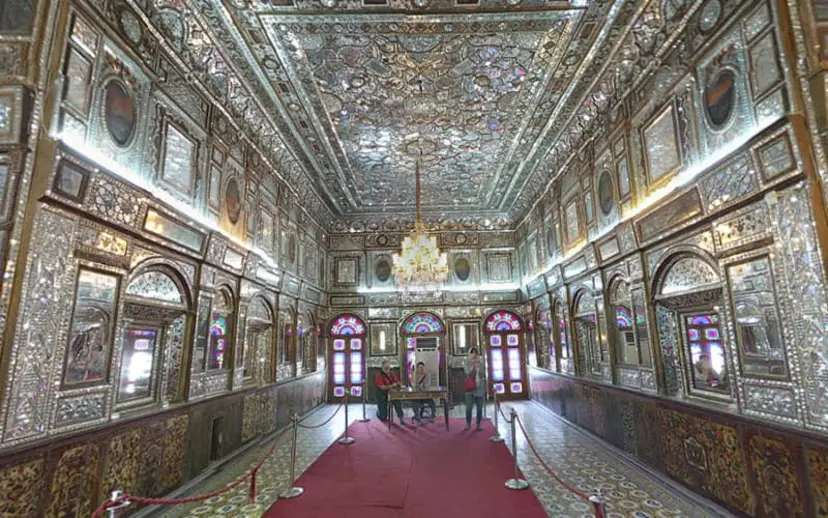
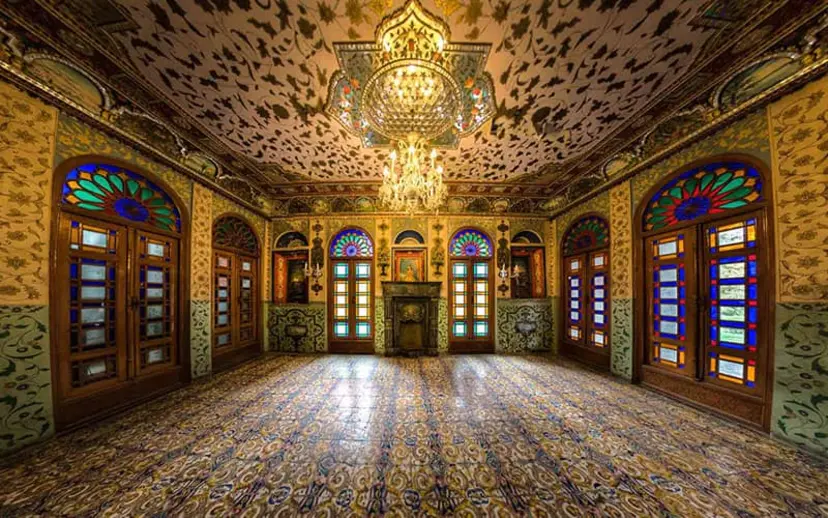
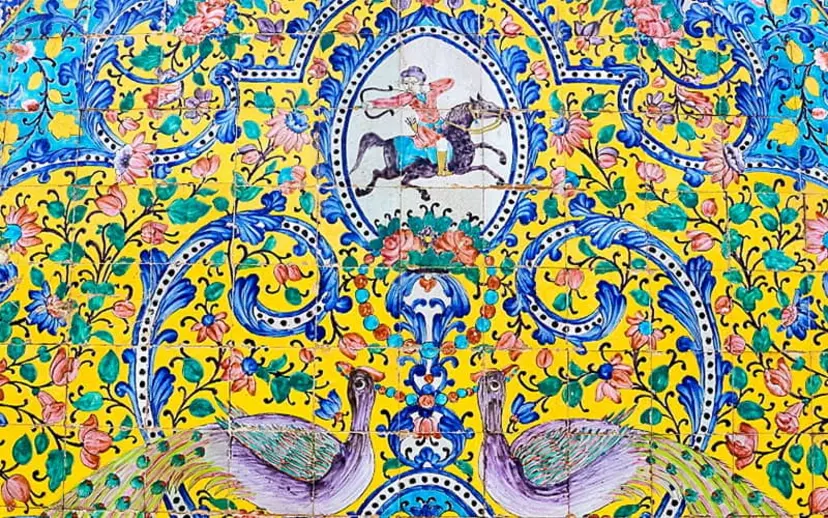
Golestan Palace is an unparalleled example of the fusion of traditional Iranian architecture with 19th-century European art and architecture. The extensive use of mirror work, plasterwork, wall paintings, stained glass, seven-colored tilework, and Persian garden design makes this complex one of the most beautiful palaces in the country.
Different Sections of the Golestan Palace Complex
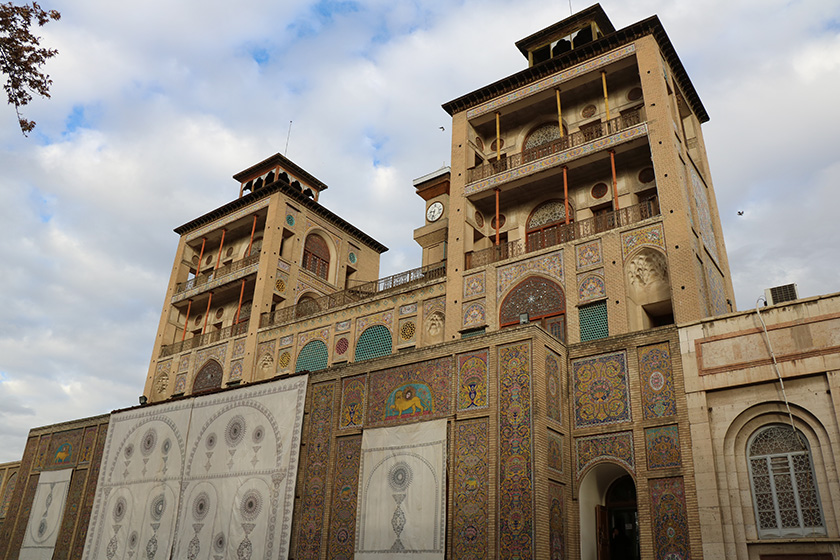
Shams-ol-Emareh
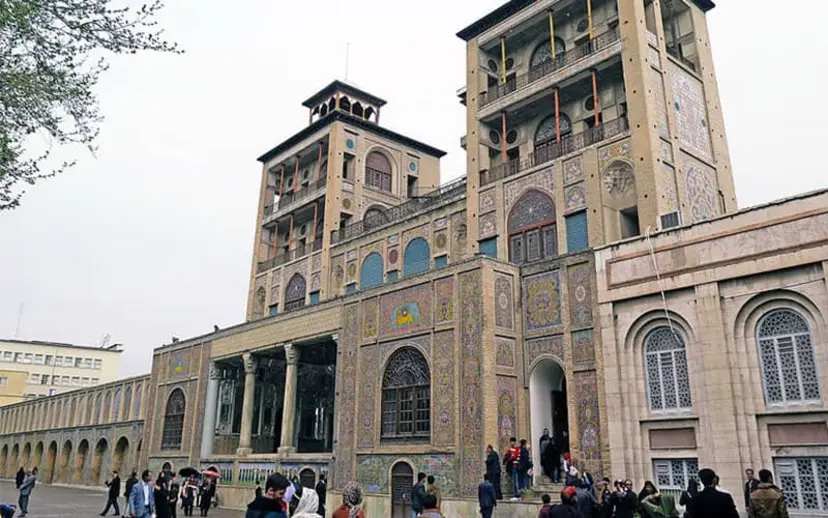
Shams-ol-Emareh is the most famous building of Golestan Palace and a symbol of Qajar-era architecture, built by order of Naser al-Din Shah. This five-story mansion was considered the tallest building in Tehran at the time, and the king would observe the cityscape from its top. The use of a metal skeleton, colorful tiles, mirror work, and the fusion of Iranian and European architecture make Shams-ol-Emareh one of the most prominent historical buildings in Iran.
Hall of Mirrors
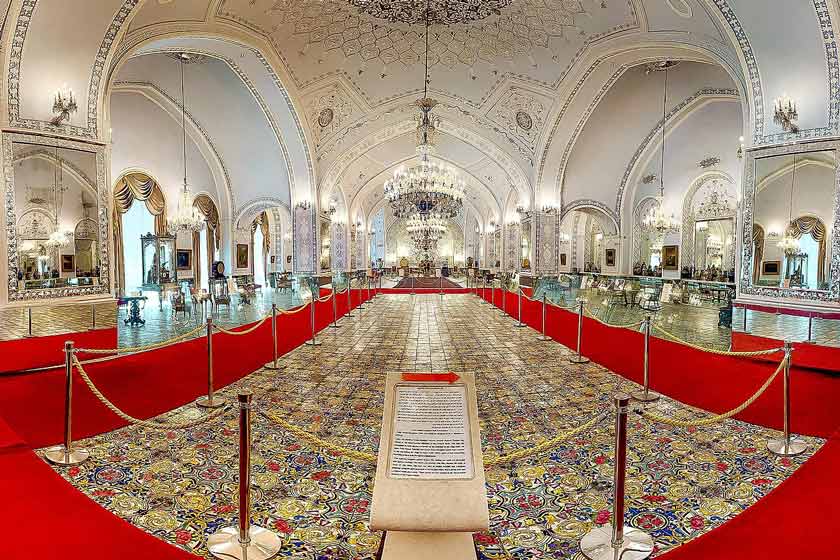
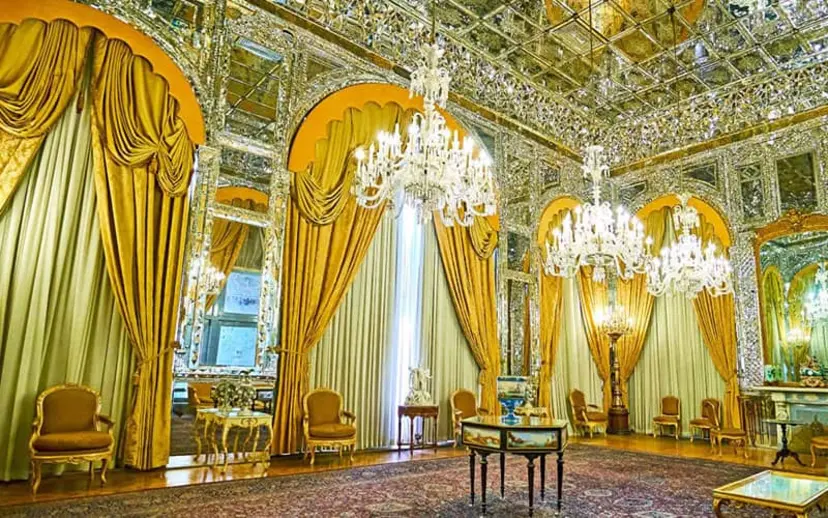
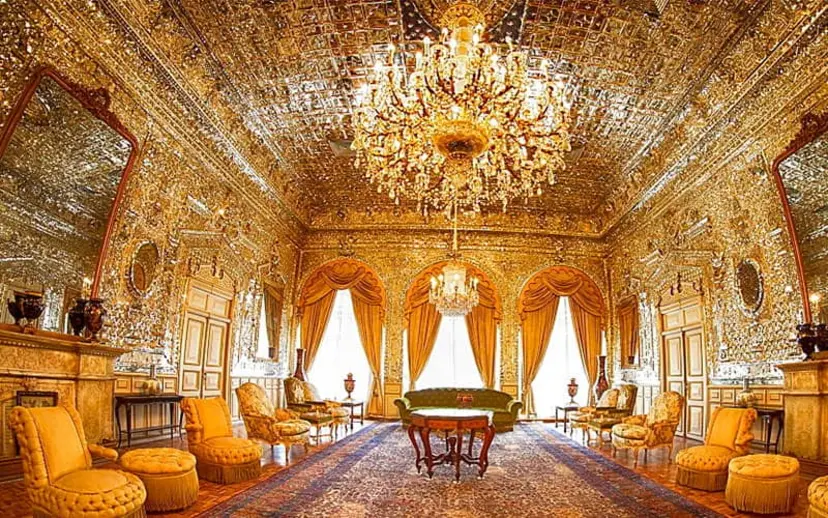
The Hall of Mirrors is one of the most beautiful and famous halls of Golestan Palace, renowned worldwide for its extremely delicate and artistic mirror work. This hall was used for formal ceremonies and hosting special guests. The famous painting “Hall of Mirrors” by Kamal-ol-Molk was also inspired by this very location. The reflection of light in thousands of mirror pieces creates a magnificent and dazzling atmosphere.
Salam Hall
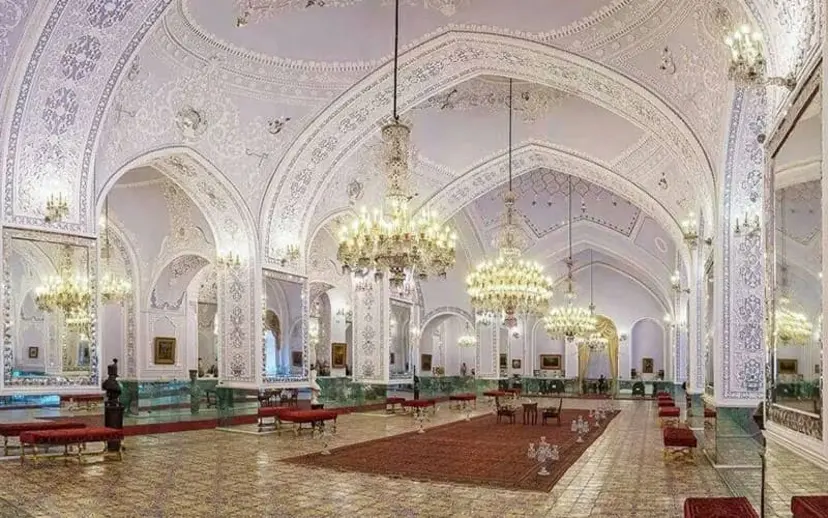
Salam Hall was built by order of Naser al-Din Shah after his first trip to Europe to serve as the royal museum and a venue for the formal “Salam” ceremony. This hall housed many valuable objects, royal gifts, and historical artifacts, and it contains the famous Peacock Throne (Sun Throne). The magnificent architecture, plasterwork, and exquisite decorations are prominent features of this hall.
Marble Throne Veranda
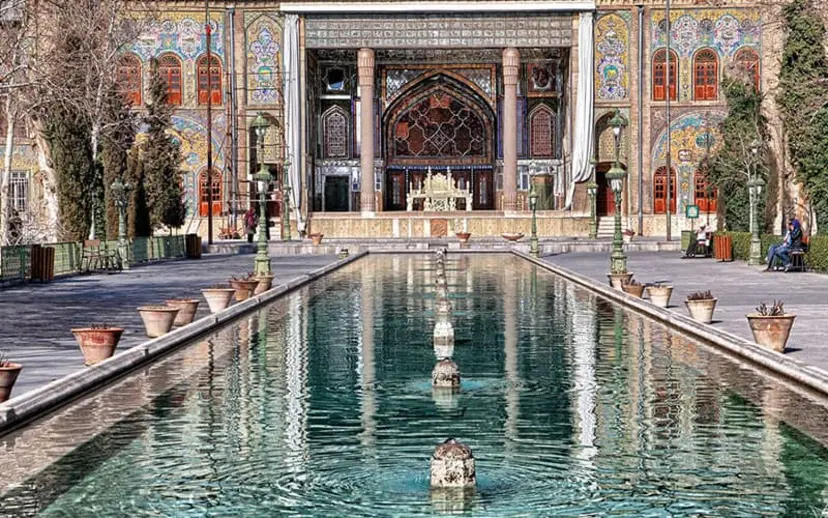
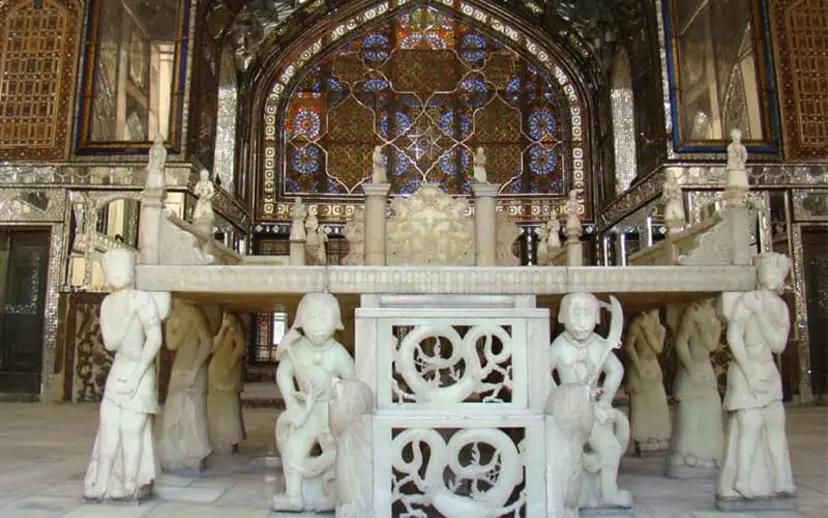
The Marble Throne Veranda is the oldest surviving part of the Golestan Palace complex, with origins tracing back to the era of Karim Khan Zand. At the center of this veranda lies a throne made of 65 pieces of yellow marble, crafted by prominent artists of that period. The Qajar kings held coronation ceremonies, public audiences, and formal meetings at this location.
Khalvat-e Karimkhani
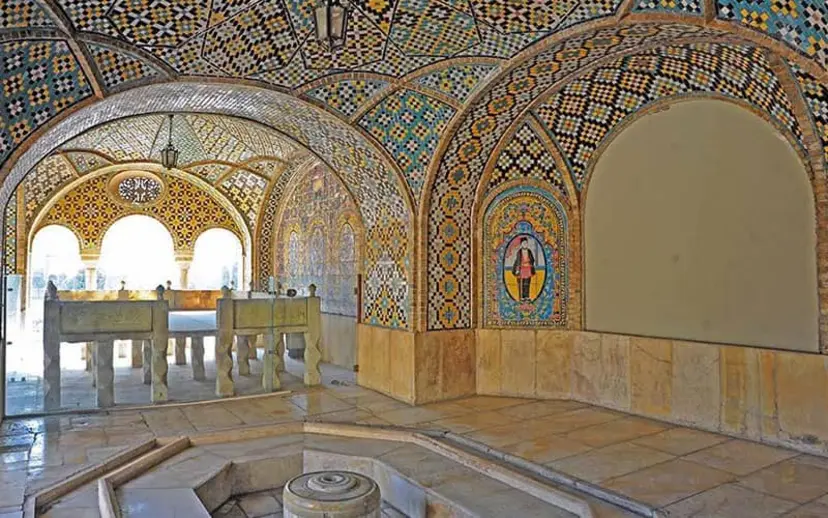
Khalvat-e Karimkhani is one of the oldest buildings in the complex, built during the Zandieh period. This section features a tranquil space with a small veranda, a beautiful pool, and stone columns, serving as a resting and private area for the kings. The tombstone of Naser al-Din Shah is also kept here today, adding to its historical significance.
Badgir Mansion
The Badgir Mansion is named after its four tall and beautiful windcatchers. These windcatchers were responsible for cooling the interior space and represent a clever example of traditional Iranian architecture. The rooms of this mansion are decorated with mirror work, paintings, colored sash windows (Orosi), and exquisite plasterwork, and Naser al-Din Shah used this building during the summer season.
Diamond Hall
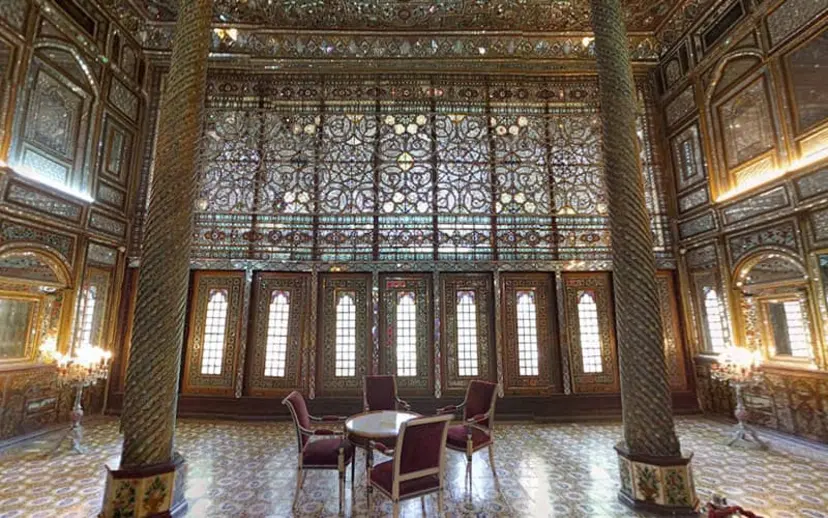
The Diamond Hall is one of the most luxurious halls of Golestan Palace, built during the reign of Fath-Ali Shah and later modified during the Naser al-Din Shah period. The hall’s name comes from the reflection of light in its diamond-like mirror work. The interior decorations, plasterwork, and beautiful sash windows make this hall one of the masterpieces of Qajar art.
Brilliant Hall
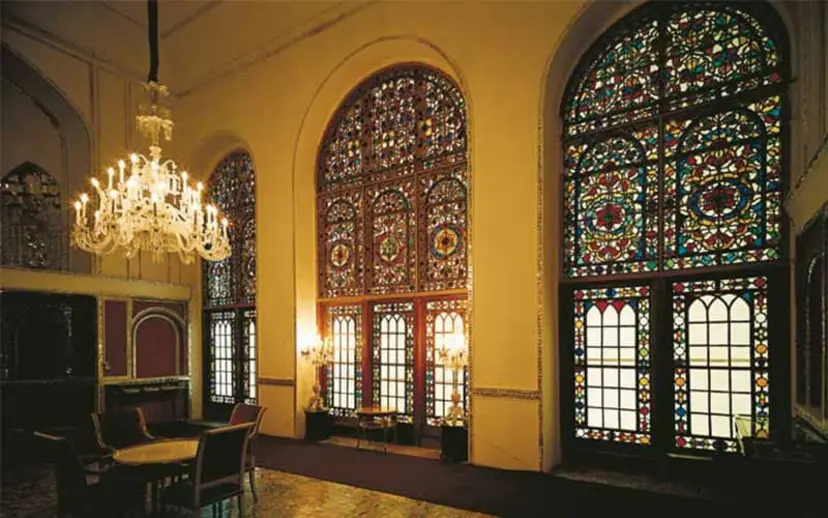
The Brilliant Hall, also known as the Ceremonial Hall, is one of the most opulent sections of the complex. With its dazzling mirror work, large chandeliers, and lavish decorations, this hall was used for official ceremonies, celebrations, and hosting important figures. It is considered a prominent example of decorative art from the Qajar period.
White Palace
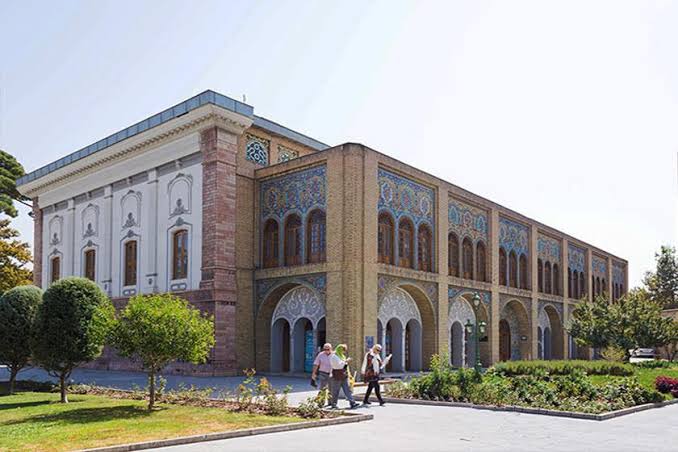
The White Palace (Kakh-e Abyaz) is named for its light-colored facade and white decorations. This building was constructed in the late Qajar period to house the valuable gifts of the Ottoman Sultan. Today, it houses the Ethnographic Museum, where visitors can learn about the customs, clothing, and lifestyles of various ethnic groups in Iran.
Chador Khaneh
Chador Khaneh is one of the lesser-known sections of Golestan Palace. In the past, it was used to store tents, ceremonial equipment, and items related to royal travels and ceremonies. Today, this section is used to display historical artifacts, royal objects, and host temporary exhibitions, showcasing a part of the Qajar court’s ceremonial history.
Ivory Hall
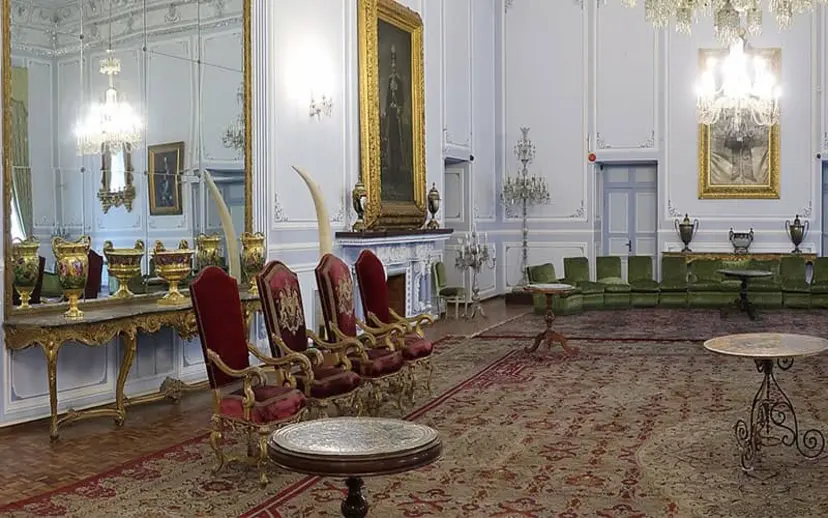
The Ivory Hall is one of the magnificent halls of Golestan Palace, with its construction dating back to the Qajar period. Initially, this hall was used to store the exquisite and valuable gifts presented to the Iranian court by kings and ambassadors from various countries. Later, during the Pahlavi era, it became a venue for banquets and entertaining official foreign guests. The stunning architecture, delicate mirror work, artistic plasterwork, and lavish decorations make the Ivory Hall one of the most beautiful sections of the Golestan Palace complex.
Photography Museum
The Photography Museum is one of the most fascinating museums in Golestan Palace, dedicated to the history of photography in Iran. Located in the pool house of the Badgir Mansion, it displays a valuable collection of old cameras, photographic equipment, historical albums, and images from the Qajar era. Since Naser al-Din Shah was among the first Iranian kings interested in photography and practiced it himself, many of the photographs on display were taken by him or the court photographers. Today, these are considered among the most important visual documents of Iran’s contemporary history.
Historical Significance
Many of the most important events in Iran’s contemporary history have taken place at Golestan Palace, including:
The coronation ceremonies of several Qajar kings
The coronation of Reza Shah Pahlavi in 1925 (1305 Solar Hijri)
The coronation of Mohammad Reza Shah Pahlavi in 1967 (1346 Solar Hijri)
Hosting ambassadors and prominent foreign figures
For this reason, in addition to its architectural value, Golestan Palace holds a special place in Iran’s history.
Address of Golestan Palace
Tehran Province, Tehran City, District 12, 15 Khordad Street, North Side of Arg Square, Golestan Palace Historical Complex.
How to Access
By Metro:
The best and easiest way to access the palace is by using Line 1 of the Tehran Metro and getting off at the 15 Khordad station. After exiting the station, you will reach the entrance of the complex after about a 5-minute walk.
By Bus:
You can use the Bus Rapid Transit (BRT) lines and get off at the Golobandak station. From there, you’ll need to walk a short distance to the palace.
By Private Car:
Due to the palace’s location in the historical district of Tehran’s Grand Bazaar and the traffic restriction zone, vehicle access in the surrounding streets is limited and parking is difficult to find. Therefore, using public transport, especially the metro, is highly recommended.
Duration of Visit
Allow between 2 to 3 hours for a full visit of the complex to properly see the mansions, museums, and garden spaces.
Why Should You Visit Golestan Palace?
If you are interested in history, architecture, photography, or art, Golestan Palace is one of the best tourist destinations in Tehran. The combination of a Persian garden, grand buildings, artistic decorations, and the historical atmosphere creates an unforgettable experience for every visitor. This complex is not only a symbol of the glory of the Qajar era but also a part of Iran’s historical and cultural identity.