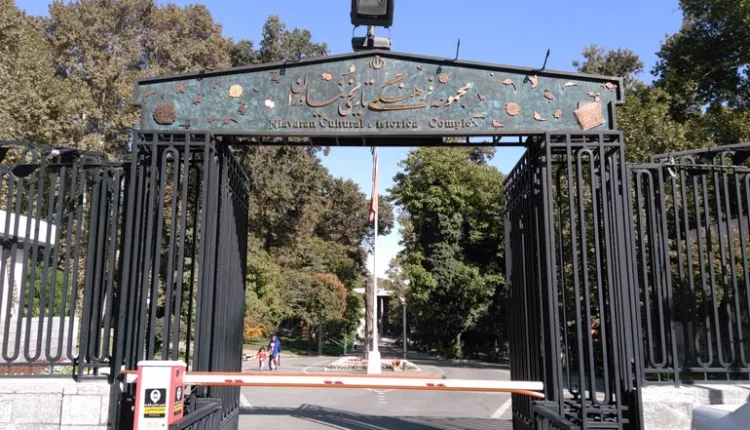
Niavaran Palace is one of the most significant historical and cultural complexes in Tehran. Situated within a lush garden in the north of the capital, it bears the marks of two important periods in Iranian history—the Qajar and Pahlavi eras. Beyond its historical value, the complex is also considered one of the most attractive sights in northern Tehran in terms of architecture, decorative arts, artworks, and natural surroundings. The Niavaran Cultural-Historical Complex covers approximately 11 hectares and houses numerous structures. Among the most important are the Niavaran Private Palace, Sahebqaraniyeh Palace, Ahmadshahi Pavilion, Jahan-nama Museum, Private Library, Private Car Museum, and the Garden of Inscriptions. What distinguishes Niavaran from many of Tehran’s historical palaces is the juxtaposition of buildings from different historical periods, allowing visitors to see Qajar architecture alongside the modern architecture of the Pahlavi era within a single complex. 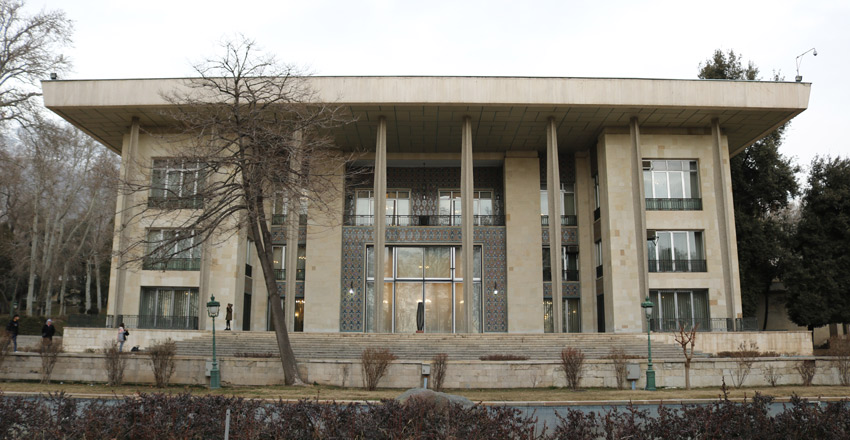
Where is Niavaran Palace?
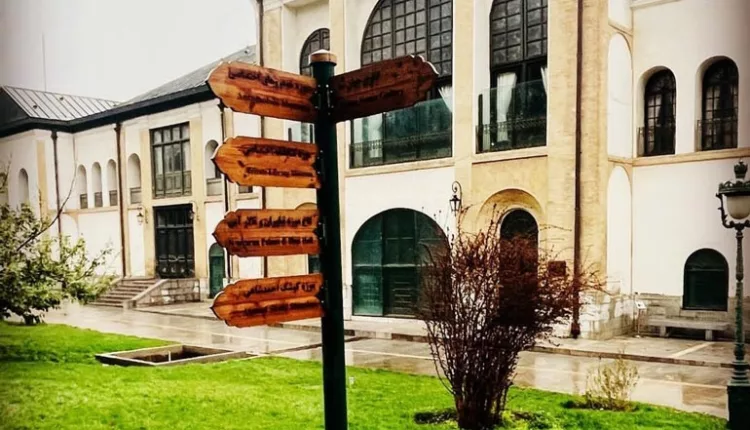
Niavaran Palace is located in northern Tehran, in the Niavaran district within the Shemiran area. The complex is situated at Shahid Bahonar Square (Niavaran) and, due to its location in one of the most pleasant climate zones of northern Tehran, its atmosphere differs significantly from many historical sites in the city center. The complex’s placement within a large garden with ancient trees means that visiting Niavaran is not limited to viewing historical buildings—the garden space itself is part of its charm.
History of Niavaran Palace
The Beginning of Niavaran’s Story in the Qajar Era
Niavaran’s story dates back to the early years of Qajar rule. Fath-Ali Shah Qajar chose the Shemiran district for its pleasant climate and ordered the construction of a summer garden near a village known by names such as “Gordeh Vi” or “Gordeh Be.” It is said that this garden was built on land that was previously a reed bed, which is why its name derives from the combination of “Ni” (reed) and “Avaran” (place of), gradually becoming “Niavaran.” After Fath-Ali Shah, Mohammad Shah Qajar also built a small structure in this garden. Subsequently, Naser al-Din Shah Qajar constructed Sahebqaraniyeh Palace in the area, and Niavaran became one of the important summer residences of the Qajar court. In the final years of the Qajar period, the Ahmadshahi Pavilion was also built, which is considered one of the prominent and historical buildings of the Niavaran complex.
Niavaran in the Pahlavi Era
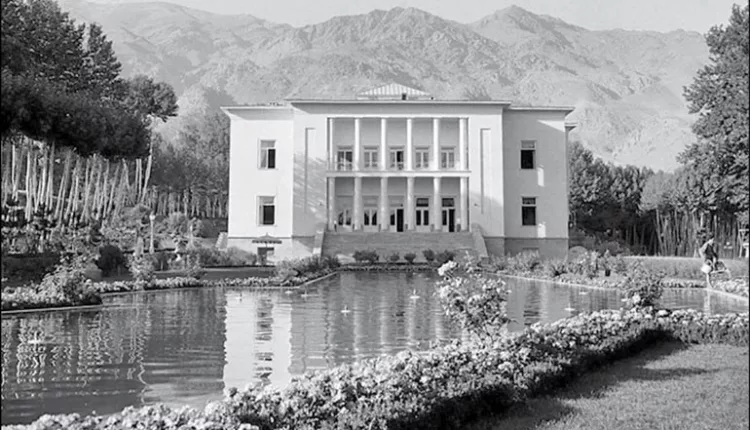
With the beginning of the Pahlavi era, significant changes were made to the Niavaran complex. During the reign of Mohammad Reza Pahlavi, it was decided to build a modern structure in this garden. Construction of the Niavaran Private Palace began in 1958 (1337 AH), and its design was entrusted to Mohsen Foroughi, an architect and professor of architecture. Engineering companies, including the consulting engineering firm of Abdol-Aziz Farmanfarmaian and MAP Company, also participated in the design and execution of the project. Construction was completed in 1967 (1346 AH), and from then until 1979 (1357 AH), Niavaran Palace served as the residence of Mohammad Reza Pahlavi and his family. In this way, Niavaran was transformed from a Qajar summer garden into one of the most important centers of life and activity for the Pahlavi court.
Architecture of the Niavaran Private Palace
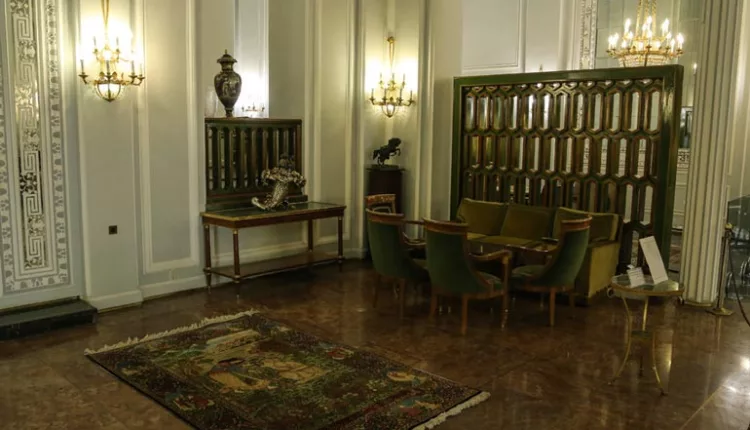
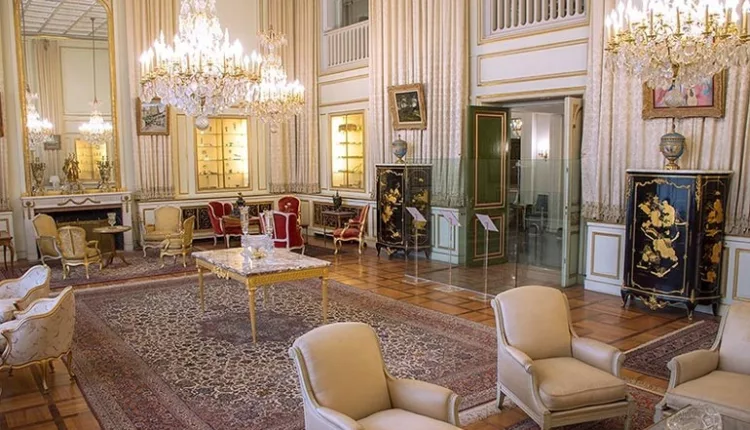
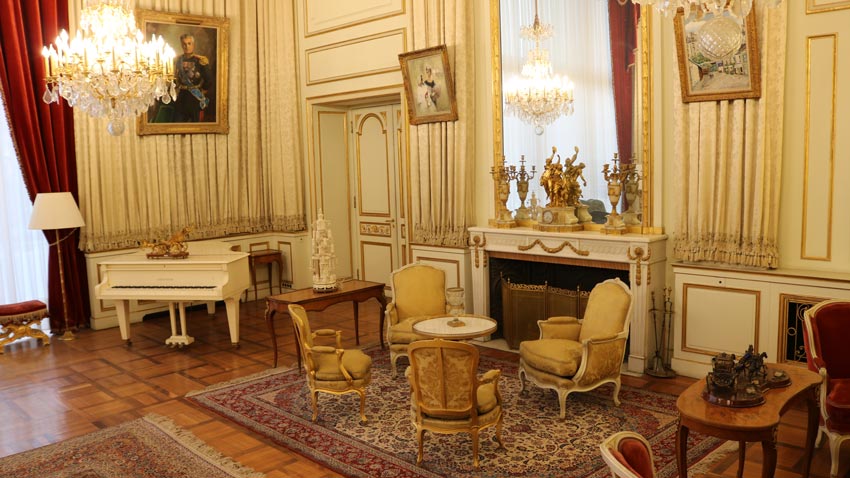
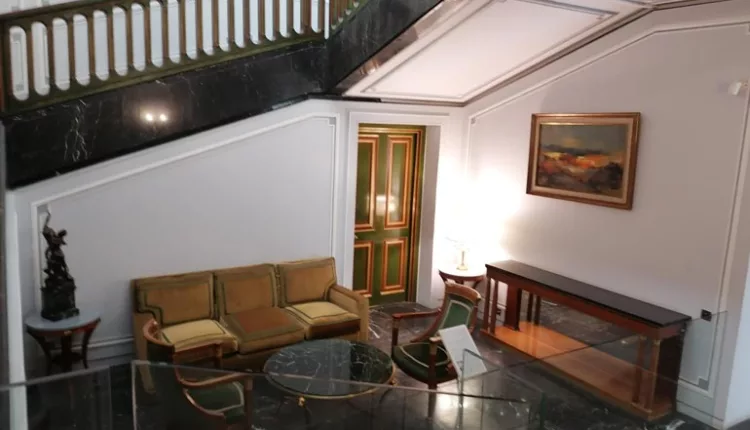
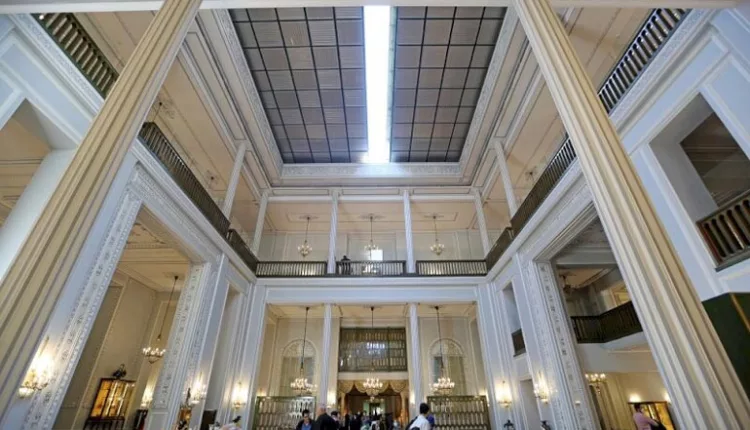
The Niavaran Private Palace differs architecturally from many of Tehran’s older palaces. The building consists of two floors and a mezzanine, covering approximately 9,000 square meters. The architecture is a combination of Iranian architecture and modern technology. In the interior design, elements of Persian art have been used alongside modern amenities and architectural styles. This combination gives Niavaran Palace a distinct identity among the buildings of the Pahlavi era. One of the palace’s most famous features is its movable aluminum ceiling, which opens and closes mechanically. This was considered an advanced architectural feature at the time of construction. Inside the palace, a collection of exquisite Persian carpets, paintings, valuable dishes, crystals, furniture, and decorative objects is preserved.
Different Sections of the Niavaran Private Palace
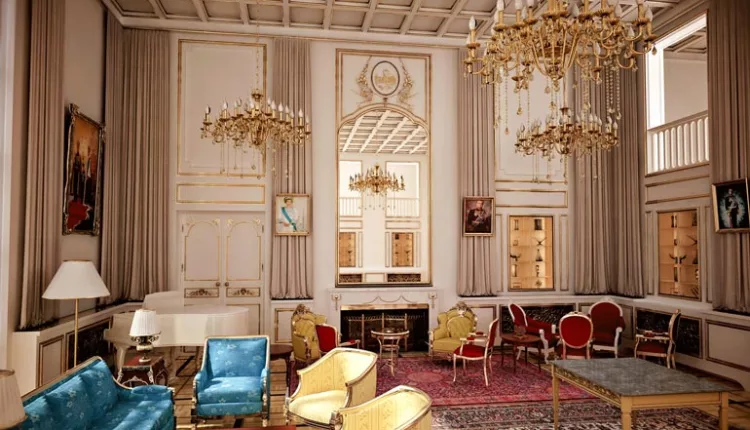
The Niavaran Private Palace consists of various sections, each reflecting aspects of the Pahlavi family’s lifestyle.
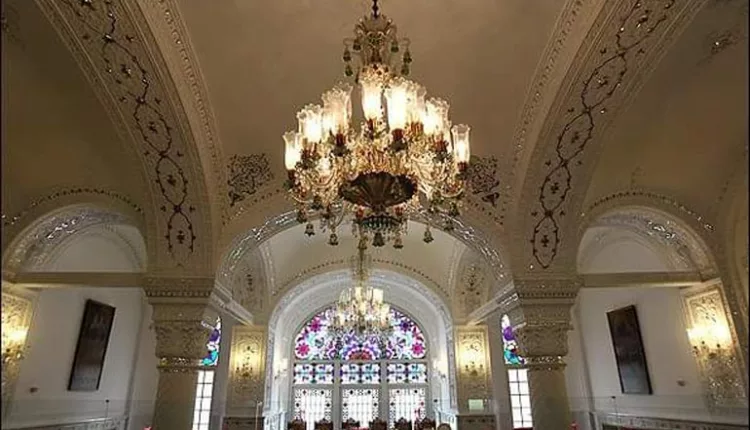
Main Foyer
One of the first spaces encountered when visiting the palace is the main foyer. This area features numerous artworks and decorative pieces, and its interior architecture combines Iranian and modern elements. Exquisite Persian rugs and a collection of artworks contribute to the ambiance of this space.
Reception Hall
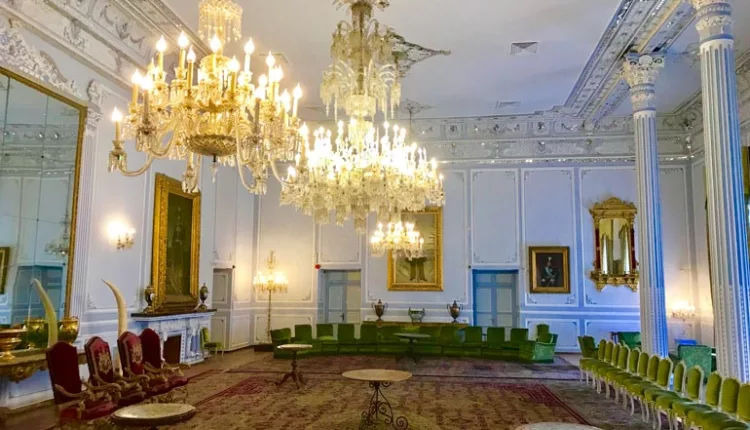
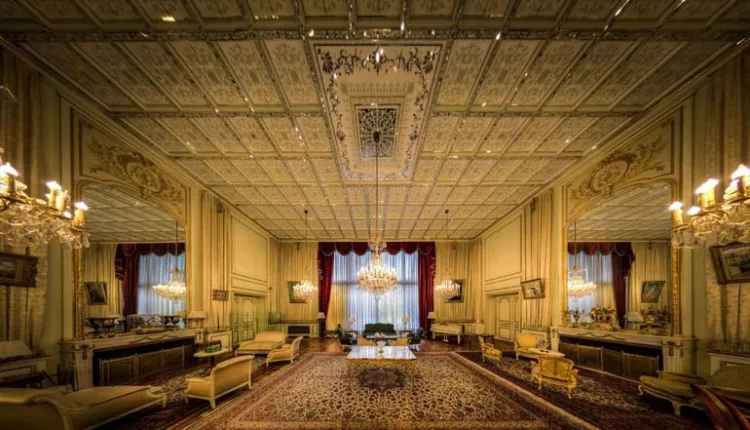
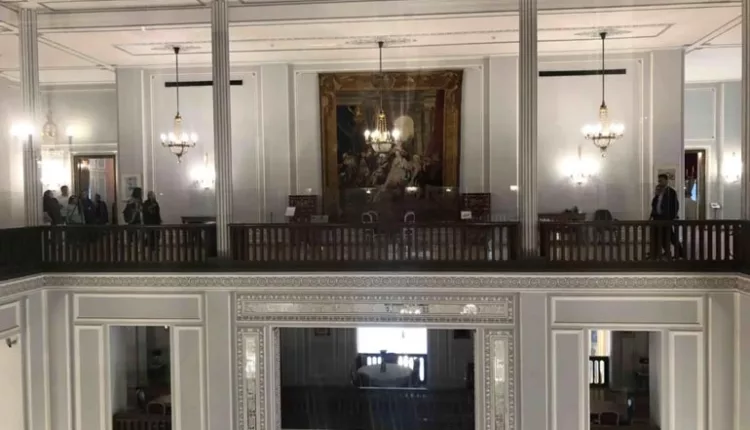
The reception hall was one of the most important spaces in the palace, used for hosting official guests and foreign political figures. The presence of furniture, tableware, paintings, and various decorations provides a fairly vivid picture of the Pahlavi court’s formal ceremonies.
Private Cinema
One of the most fascinating parts of the palace is the private cinema. This space was used for film screenings by the royal family and their guests and was equipped with remarkable facilities for its time.

Private Rooms
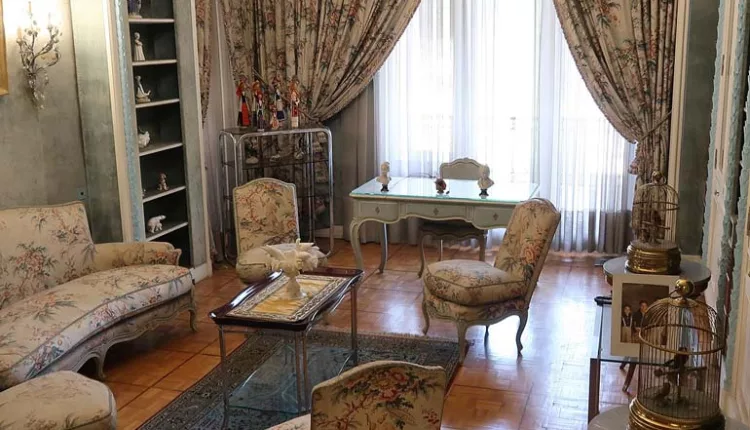
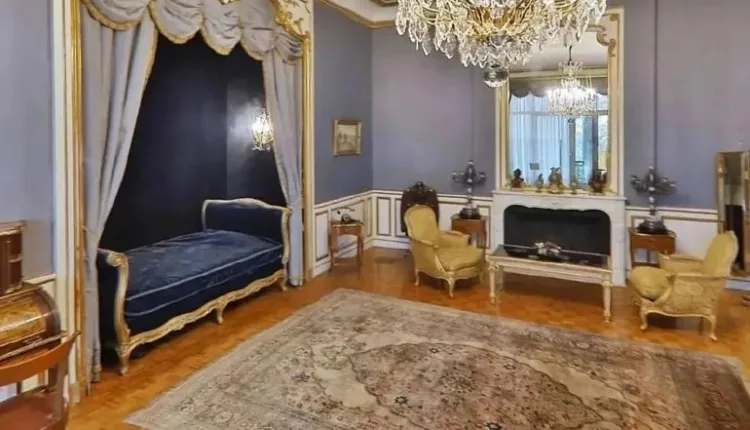
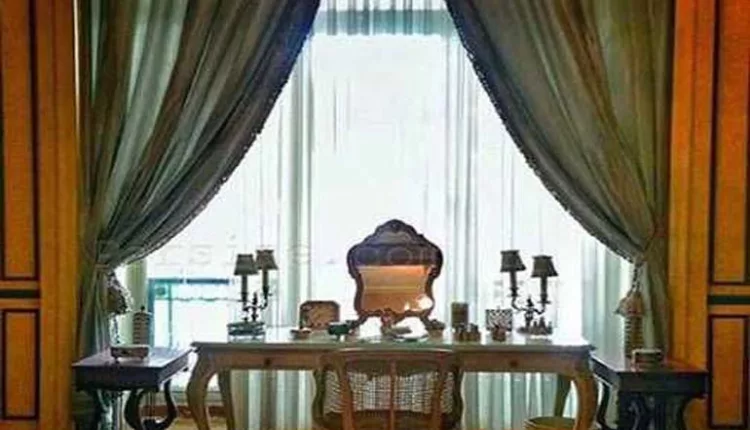
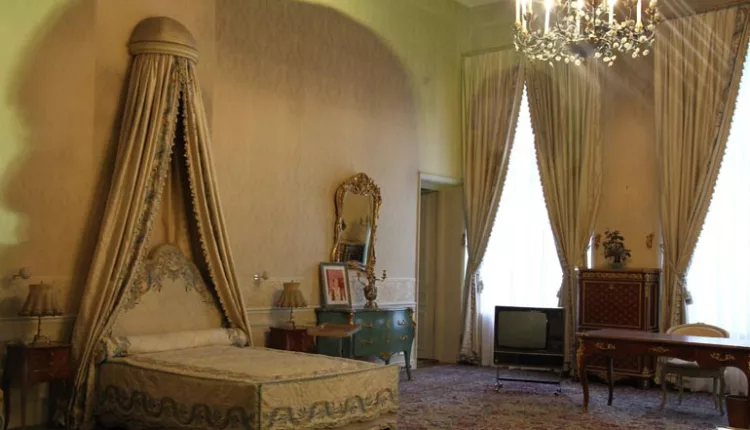
On different floors of the palace, there were bedrooms and private spaces for family members. The rooms belonging to Mohammad Reza Pahlavi, Farah, and their children are among the sections that attract attention during visits. In these areas, personal belongings, furniture, décor, and some objects used by the Pahlavi family have been preserved.
Sahebqaraniyeh Palace: One of Niavaran’s Most Important Qajar Buildings
One of the oldest and most well-known buildings in the complex is Sahebqaraniyeh Palace, built by order of Naser al-Din Shah Qajar. After thirty years of his reign, Naser al-Din Shah adopted the title “Sahebqaran” (Lord of the Auspicious Conjunction), and accordingly, this building was named Sahebqaraniyeh. The palace underwent various changes over time, and its function changed during the Pahlavi era as well. During the reign of Mohammad Reza Pahlavi, after extensive modifications, Sahebqaraniyeh was used as a workplace and office. Notable sections include the Mirror Hall, the Negotiation Room, the Ambassadors’ Waiting Room, and the Pool House (Howz Khaneh). The Mirror Hall is one of the most famous spaces in this building, and its interior decorations exemplify the art and courtly architecture of the Qajar period.

Ahmadshahi Pavilion
The Ahmadshahi Pavilion is another important historical building in the Niavaran complex and a remnant of the Qajar era. This building was constructed during the reign of Ahmad Shah Qajar and has a different structure from the grand royal palaces. The two-story brick building, its marble pool, and its interior spaces are notable features of the pavilion. During the Pahlavi period, this building was used for various purposes, and after restoration, it was opened to visitors as one of the complex’s museums.

Jahan-nama Museum
Jahan-nama Museum is one of the artistic sections of the Niavaran complex, housing a diverse collection of artworks from Iran and around the world. This museum contains works by Iranian and foreign artists, as well as artistic objects from various cultures. For this reason, it holds particular appeal for enthusiasts of modern art and visual arts. The presence of contemporary artworks alongside pieces from various cultures distinguishes this museum from purely historical ones.
Niavaran Private Library
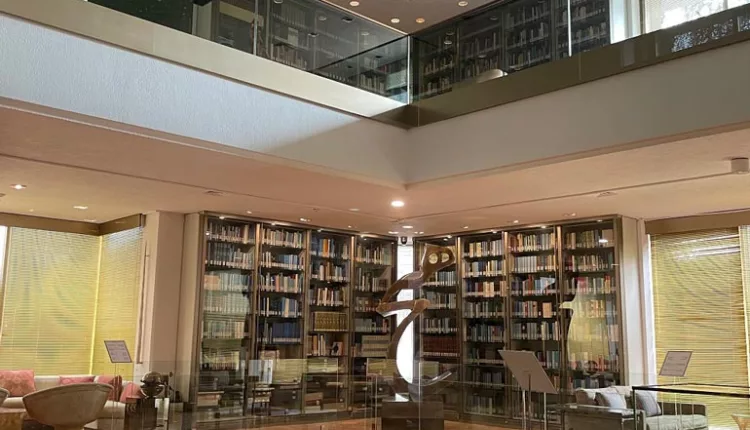
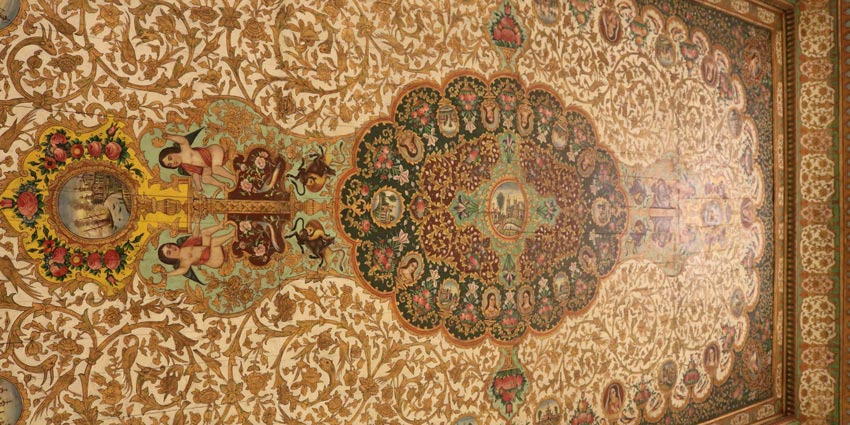
The Private Library is another notable section of the complex, located near the main palace. This library was built in the 1970s (1350s AH) and served as the private library of Farah Pahlavi. The library building is designed over two floors and a basement, and its interior architecture incorporates glass, bronze, and mirrors. Beyond its historical value, the library is also visually impressive in terms of interior design, and its design differs from many traditional Iranian libraries.

Niavaran Private Car Museum
The Niavaran complex also includes a section dedicated to the private vehicles of the Pahlavi family. This museum displays a number of cars used by the royal family, as well as motorcycles and miniature car models. Among the notable vehicles in this collection are models of Rolls-Royce Phantom. In addition to showcasing vehicles, this museum also narrates part of the social history and lifestyle of the Pahlavi family.

Garden of Inscriptions
One of the distinctive sections of the Niavaran complex is the Garden of Inscriptions. In this area, examples of historical Iranian inscriptions are displayed. This collection helps visitors become familiar with samples of Iranian historical scripts and languages, as well as the written heritage from various periods.

Historical Significance of Niavaran Palace
Niavaran Palace is not merely a royal building; it embodies a part of contemporary Iranian history. On one hand, buildings like Sahebqaraniyeh and Ahmadshahi Pavilion recount the Qajar period, while on the other hand, the Niavaran Private Palace represents the architecture and lifestyle of the Pahlavi court in the final decades of the monarchy. For this reason, visiting Niavaran can be considered a journey through the history of Iran over the past two centuries—a journey that begins with the summer gardens of Qajar kings and reaches the life of the Pahlavi court and the developments of the monarchy’s final years.
Best Time to Visit Niavaran Palace
Due to the complex’s location in northern Tehran and its large, verdant garden, spring and autumn are usually particularly appealing seasons for a visit. In spring, the greenery is vibrant and refreshing, and in autumn, the garden’s old trees display beautiful yellow and orange hues. If your goal, in addition to visiting the palaces, includes photography and enjoying the garden atmosphere, it’s better to choose a time with suitable lighting and pleasant weather.
How to Get to Niavaran Palace?
Niavaran Palace is located at Shahid Bahonar Square and can be reached by private car, taxi, and public transportation. If you plan to go by metro, you can get to one of the suitable stations in northern Tehran and cover the rest of the way by taxi or bus. For those with private cars, it’s better to allow extra time for parking on busy days.
Attractions Near Niavaran Palace
Niavaran Palace’s location allows you to combine your visit with several other northern Tehran attractions. Sa’dabad Palace, Darabad Wildlife Museum, Ferdows Garden, and the Cinema Museum are among the places that could be included in a one-day itinerary for northern Tehran. This way, you can arrange a complete program for exploring Shemiran and see several historical and cultural attractions in one day.
Important Tips for Visiting Niavaran Palace
Allow several hours for a thorough visit of the complex. Don’t limit yourself to the main palace; visit the museums and other buildings if they are open. Pay attention to photography rules and artifact protection regulations when visiting the museums. Opening hours for different sections may vary. Before your visit, check the status of the buildings and museums you wish to see. Spring and autumn are good choices for a more enjoyable garden experience.
Why is Niavaran Palace Worth Visiting?
Niavaran Palace is one of the few places in Tehran where you can see Qajar history, modern Pahlavi architecture, Persian art, global artworks, and a historical garden all in one place. Ahmadshahi Pavilion and Sahebqaraniyeh tell the Qajar part of the story; the Niavaran Private Palace offers a picture of Pahlavi court life; and the library, Jahan-nama Museum, Car Museum, and Garden of Inscriptions each display a different facet of Iran’s history and culture. For this reason, if you are interested in contemporary Iranian history, architecture, royal palaces, museums, and historical gardens, Niavaran Palace is one of Tehran’s most fascinating tourist destinations—a place where walking through its garden, admiring its architecture, and seeing objects left from the past creates a unique experience of exploring the capital.
Summary
The Niavaran Cultural-Historical Complex can be considered one of Tehran’s most valuable historical complexes—one whose history begins in the era of Fath-Ali Shah Qajar and becomes one of the most important royal residences during the Pahlavi period. Today, as a cultural and museum complex, it provides an opportunity to become acquainted with a significant part of Iran’s history, art, architecture, and social life during both the Qajar and Pahlavi eras. The placement of these buildings within a large, lush garden also means that visiting Niavaran is not merely a museum visit but carries the ambiance of a historical and cultural tour.