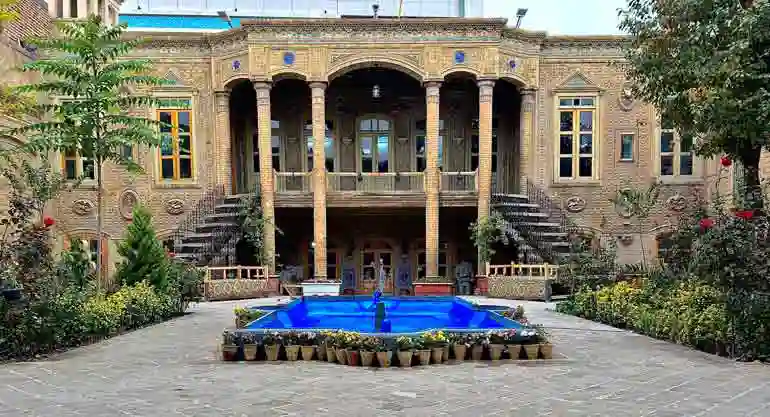
Darugheh Historical House is one of the valuable historical buildings in Mashhad, attracting visitors interested in history and art with its elegant architecture, delicate decorations, and a blend of traditional Iranian architectural styles and Russian influences. Located in the old part of Mashhad, near the holy shrine of Imam Reza (AS), the house offers an opportunity to learn about the lifestyle, architectural tastes, and decorative arts of the Qajar era. Its charming courtyard, porches, tilework, and intricate brick details make Darugheh House one of Mashhad’s distinctive attractions.

Where Is Darugheh Historical House?
Darugheh Historical House is located in the historic Nowghan neighborhood of Mashhad, near Navvab Safavi Street and the Hoz-e Mesgaran passage. Situated within the historic district surrounding the holy shrine of Imam Reza (AS), the house can easily be included in a sightseeing tour of the city’s old quarters.
Its location among Mashhad’s old alleyways adds to the charm of visiting the house. In addition to admiring its architecture, visitors can experience the atmosphere of the city’s historic neighborhoods.

History of Darugheh Historical House
Darugheh Historical House was built in the late Qajar period. Its construction is attributed to Mohammad Yousef Khan Herati, the last darugheh, or chief of police, of Mashhad during the Qajar era. It is believed that the house was built at his order to serve as his residence and a place to receive guests.
The term “Darugheh” refers to an administrative position in the governmental structure of that period. A darugheh was responsible for law enforcement and aspects of urban supervision. Today, the house associated with Mashhad’s darugheh stands as a reminder of the life and status of a city official in the late Qajar period.
Over time, the building ceased to serve primarily as a residence. Following restoration and renovation, it became one of Mashhad’s historical attractions open to visitors. Darugheh House was added to Iran’s National Heritage List in 2012.

Architecture of Darugheh Historical House
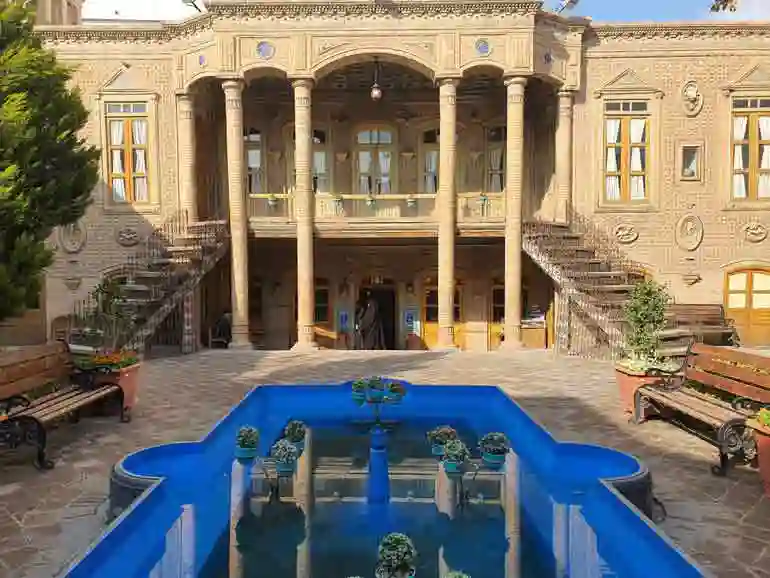
One of the main reasons for Darugheh House’s reputation is its distinctive architecture and artistic details. Its design combines traditional Iranian architectural principles with certain elements and influences from Russian architecture. This combination has created a building that retains the characteristics of historic Iranian houses while displaying distinctive features in its exterior and interior decorations.

The Central Courtyard and Layout
Darugheh House follows the traditional Iranian residential design, with a central courtyard serving as the main space connecting different parts of the building. The rooms and surrounding spaces illustrate the layout and design of traditional Iranian homes.
Changes in the courtyard’s floor levels, the porches, and the connections between the open space and the rooms add visual variety to the building. These features allow visitors to appreciate its architectural details from different perspectives.

Brickwork and Tilework
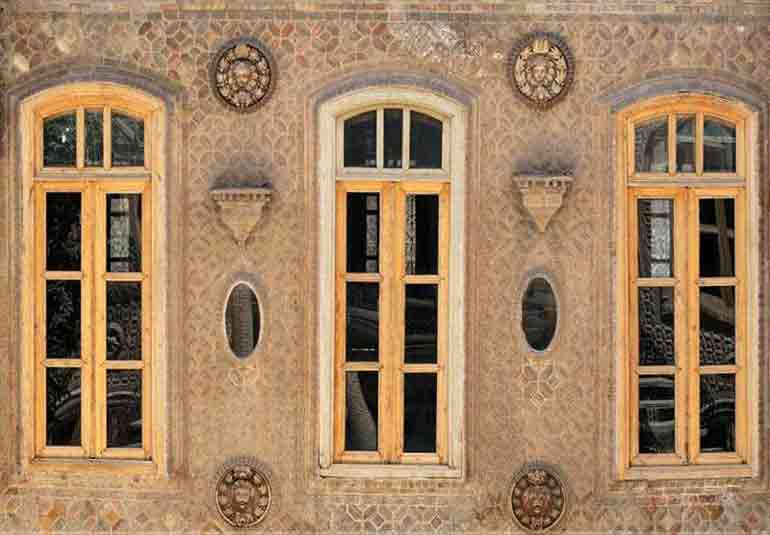
Brick is one of the main materials used in the construction and decoration of Darugheh House. Decorative brick patterns, colorful tilework, and plaster ornaments give the building a striking appearance.
In various parts of the house, visitors can observe combinations of colors, geometric patterns, and decorative details that reflect the builders’ attention to the beauty of both the exterior and interior spaces.
Porches and Interior Decorations
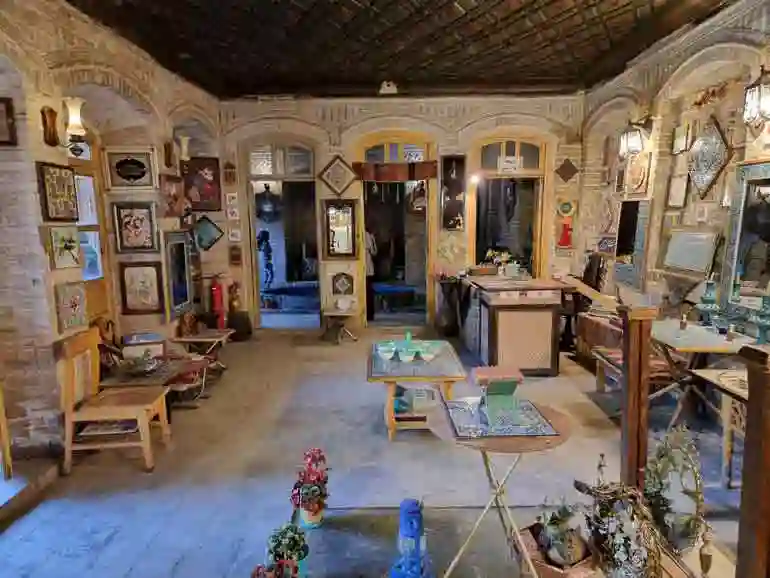
The porches and windows play an important role not only in the building’s functionality but also in shaping its overall appearance. Interior decorations, intricate plasterwork, and the combination of different materials elevate the house beyond a simple residential building, making it a valuable example of late Qajar architectural art.
Russian Architectural Influences
One feature often mentioned in descriptions of Darugheh House is the influence of Russian architecture on certain parts of the building. These elements, combined with the traditional layout of Iranian houses, give the structure a distinctive appearance. Nevertheless, its main architectural identity remains closely connected to the central courtyard, porches, and decorative features characteristic of historic Iranian architecture.

Why Visit Darugheh Historical House?
Darugheh Historical House is more than just an old building; it represents an important part of Mashhad’s social and architectural history during the late Qajar period. It is an appealing destination for visitors interested in history, architecture, and photography.
During a visit, you can admire the brickwork, tilework, central courtyard, porches, and restored sections of the house up close. Its location in Mashhad’s old district also provides an opportunity to explore another aspect of the city’s past, complementing the religious significance of the holy shrine of Imam Reza (AS).
Best Time to Visit Darugheh House
Spring and autumn are generally suitable seasons for exploring Mashhad’s historic district and visiting Darugheh House, thanks to the city’s typically milder weather during these months. The house can also be visited during the hot summer or cold winter months, but it is advisable to check the opening hours and visitor arrangements before setting out.
If you plan to explore several historical attractions near the holy shrine, consider including Darugheh House in your itinerary for the old part of the city.

Address of Darugheh Historical House in Mashhad
Address: Darugheh Historical House, Hoz-e Mesgaran passage, Navvab Safavi Street, Mashhad, Razavi Khorasan Province, Iran.
How to Get to Darugheh Historical House
You can reach Darugheh Historical House by private car, taxi, or public transportation. Since the building is located in the old part of the city, where some surrounding alleyways are relatively narrow, direct vehicle access to the entrance may be limited. You may therefore need to walk the final part of the route.
If you are traveling from the area around the holy shrine of Imam Reza (AS), you can follow the route toward Navvab Safavi Street and the Hoz-e Mesgaran passage. For more precise directions, it is recommended to use a navigation app and check the surrounding roads before setting out.

Attractions Near Darugheh Historical House
A visit to Darugheh House can be combined with exploring other historical and cultural attractions in Mashhad. Places you may wish to include in your itinerary are:
The Holy Shrine of Imam Reza (AS)
Goharshad Mosque
Reza Bazaar
Museums and historical buildings in central Mashhad
The distance and travel time to each location depend on the chosen route and traffic conditions. It is therefore advisable to check their exact locations on a map before planning your visit.

Conclusion
Darugheh Historical House is one of Mashhad’s valuable attractions. With its Qajar-era history, distinctive blend of architectural influences, and remarkable decorations, it offers a glimpse into the city’s past and artistic heritage. If you are visiting Mashhad and are interested in history and architecture as well as religious sites, exploring this historic house can be a rewarding way to discover another dimension of the city’s cultural heritage.